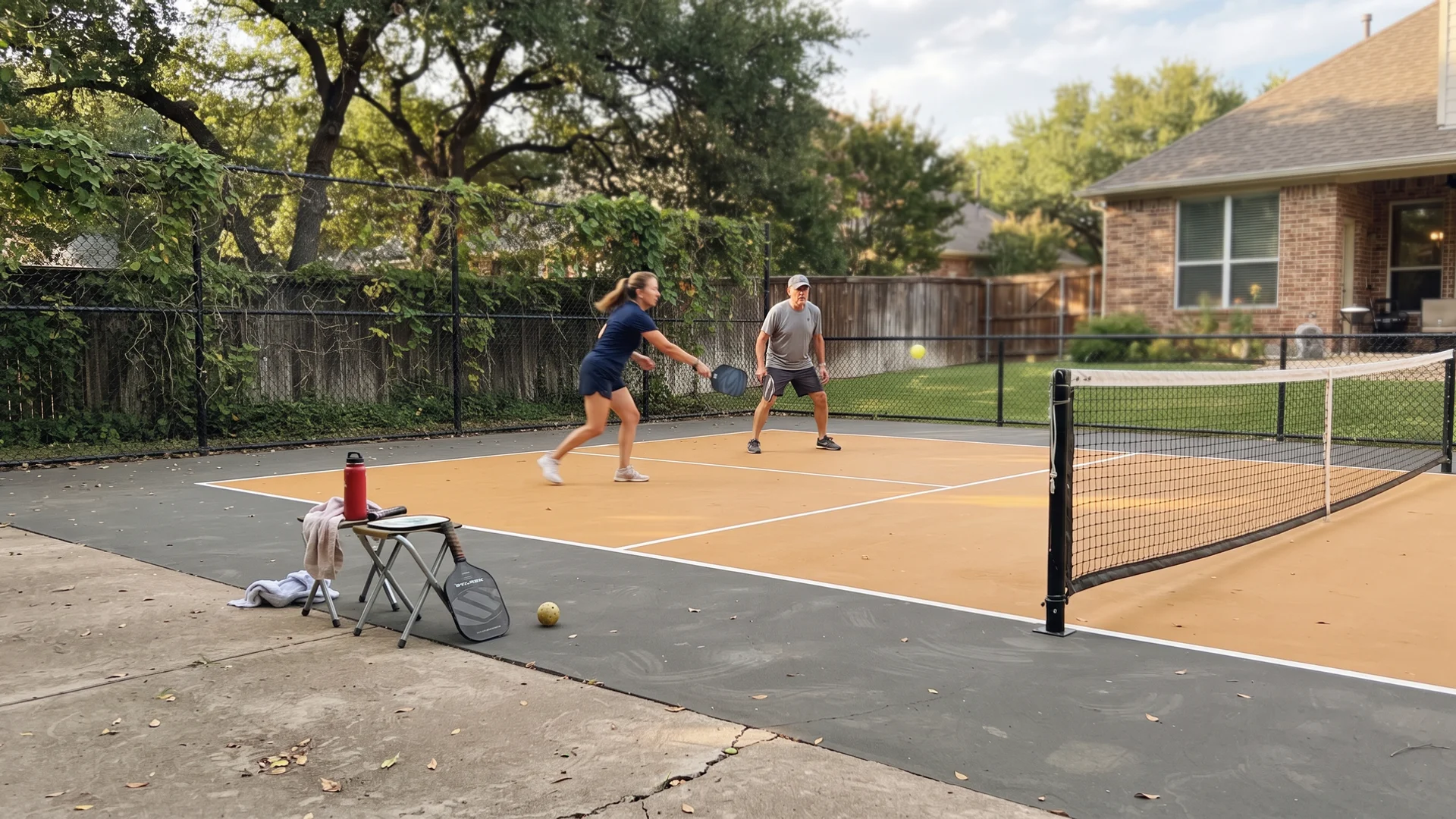
Custom Pickleball Court Construction in Dallas–Fort Worth
Custom single and multi-court pickleball builds for backyard and commercial properties across Dallas–Fort Worth.
- Licensed & insured
- 325+ courts built
- 25–30 Days builds
- Free HOA handling
What Goes Into a Tournament-Grade Pickleball Court?
Most people picture a pickleball court as a slab with lines painted on it. The lines are the last two percent of the job. What determines whether your court still plays true in ten years is everything underneath: how the ground was prepared, how the concrete was engineered, and how water gets off the surface.
We build to USA Pickleball (USAP) specifications. The playing boundary is 20 by 44 feet, with a 7-foot non-volley zone (kitchen) on each side of the net. But the boundary is not the court. Players chase balls past the baseline, and a court built right to the line feels cramped and unsafe. We pour a 30x60 slab footprint, which is the recreational standard and gives you real run-off room at both ends and along the sidelines.
Underneath that surface sits a post-tensioned concrete slab. North Texas is built on Blackland Prairie clay, a high-plasticity soil that swells in wet weather and contracts in drought. That movement is relentless, and it is what splits standard rebar-poured slabs along a weak line within two or three seasons. A post-tension slab has steel tendons stressed after the concrete cures, holding the entire pour in compression so it moves as one engineered unit. We pair it with a vapor barrier / moisture mitigation layer to control moisture migration from below.
The last structural piece is drainage. We build a continuous 1% slope drainage plane across the pad so rainwater sheets off rather than settling into low spots. This is the difference between a court you can play on an hour after a Texas downpour and one with permanent birdbaths. Construction follows American Sports Builders Association (ASBA) guidance throughout.
On top of the cured slab goes the 7-layer acrylic color system: adhesion promoter, acrylic resurfacer coats with graded silica sand for texture, colour coats, and regulation line paint. It is a genuine surfacing system, not court paint, and it is what holds colour and grip through 110-degree summers.
Common Problems We Solve
Courts that crack in the second or third year
Nearly every cracked backyard court we are asked to repair in DFW was poured without post-tensioning. The concrete itself is usually fine. The soil beneath it moved, and there was nothing holding the slab together. Rebuilding on a post-tension slab is the fix, and building that way the first time is considerably cheaper.
Water pooling after every storm
A court that holds water was almost always poured flat, or sloped in the wrong direction. Standing water degrades the acrylic surface, breeds algae, and makes the court unusable for days. The 1% slope plane is planned before the forms go in, not corrected afterwards.
HOA approval that stalls for months
Architectural committees ask for specific things: dimensions, fence height and material, surface colours, and lighting photometrics if you are adding lights. Submissions that arrive without them go to the bottom of the pile. We send the complete packet the first time, which is why most of our submissions clear on the first review.
Four crews and nobody in charge
A typical court build involves an excavator, a concrete contractor, a surfacing company, and a fencing or equipment installer. Four schedules, four invoices, and four parties who blame each other when something goes wrong. We are 100% in-house, so the crew that digs your pad is the crew that tensions your net.
Turning an Existing Tennis Court Into Pickleball Courts
Tennis-to-pickleball conversion is one of the most common requests we get, particularly from HOAs and homeowners with an underused tennis court. A standard tennis court has enough surface to hold up to four pickleball courts, or one or two with generous surrounds and a shared walkway.
The decision hinges entirely on the existing slab. If it is structurally sound, with only surface cracking and normal wear, we repair the cracks with a fibreglass membrane, level any low spots, resurface with the full acrylic system, and stripe it for pickleball with a brass internal-wind net tensioner and proper posts. That is a fast, cost-effective project.
If the slab has actually moved, if cracks run through the full depth, or if the court holds water in a way that grading cannot fix, then resurfacing is putting good money over a failing base. We will tell you that directly, even though a rebuild is the harder sell. A resurface over a moving slab reappears as cracks within a season or two.
What Your Build Week Looks Like
Once permits and HOA approval are in hand, the schedule is predictable. Week one is excavation and sub-base: we cut the site, compact the aggregate base, and set forms. Week two is the pour, with the vapour barrier and post-tension cables placed before concrete arrives, then tendons stressed once it reaches strength.
Weeks three and four are the cure and surfacing. Concrete needs time, and rushing acrylic onto a green slab is how you get delamination in year two. When it is ready, we acid-etch, apply the resurfacer and colour coats, and stripe to regulation tolerance. Week five is equipment and finishing: net posts set in proper concrete footings, tensioner fitted, fencing and lighting if they are part of your scope, then the walkthrough.
Through all of it you get a daily update from the same crew lead, and the site is swept before anyone leaves. Most of our customers tell us the cleanliness surprised them more than the speed. If you are weighing when to start, why fall is the ideal window to build in DFW covers how weather affects the pour and the cure.
Transparent Pricing
How Much Does Pickleball Courts Cost in Dallas?
Every project is quoted flat-rate and all-inclusive after a free on-site consultation. The ranges below are typical turnkey pricing, not a starting point that grows once we arrive.
Single Court
30×60 pad, typical backyard build
- Regulation 20×44 play area on a 30×60 engineered pad
- Post-tension concrete slab with moisture mitigation
- 7-layer 100% acrylic surface, two-tone
- USA Pickleball regulation striping
- Brass internal-wind net tensioner and posts
- Free HOA permitting and approval handling
Court + Enclosure
single court with fencing and windscreens
- Everything in the single court build
- Chain-link, vinyl, or aluminium perimeter fencing
- HDPE windscreens with blowout vents
- Acoustic barrier option for neighbour-facing runs
- Gate and hardware included
- 3D pro-spec design preview before construction
Multi-Court / Lit
two-court bank or single court with LED lighting
- Everything in the enclosed court build
- Dark-sky compliant LED sports floodlighting
- Zero-footcandle property-line spillage design
- Shared walkway planning for multi-court banks
- Galvanised steel lighting poles on engineered footings
- Electrical rough-in and final commissioning
Ranges reflect typical turnkey projects across DFW. Final pricing depends on site access, excavation depth, drainage work, and add-ons like lighting or fencing. Every quote is flat-rate and all-inclusive after a free on-site consultation, and financing is available.
Why Choose Us
Why DFW Trusts Us With Pickleball Courts
Built to USA Pickleball specification
A 20×44 playing boundary, a 7-foot non-volley zone on each side of the net, and a 30×60 slab footprint that gives players real room to chase a ball without hitting a fence.
Post-tension slab for Blackland Prairie clay
Tensioned cables keep the slab acting as one engineered unit through seasonal swelling. Standard rebar pours in this soil commonly crack within two or three wet-dry cycles.
Free HOA handling on every project
We assemble the ACC or ARC submission, supply the 3D rendering and material specs committees ask for, and track it through review. You do not make a single phone call.
One in-house crew, no subcontractors
The same team excavates, pours, surfaces, stripes, and installs the net system. No handoffs means no gaps in the schedule and no arguments about whose responsibility a defect is.
Drainage engineered before the pour
A continuous 1% slope plane routes rainwater off the surface instead of letting it settle. That is what stops the birdbath pooling you see on older DFW courts after a storm.
Flat-rate pricing with financing
One all-inclusive number after the on-site measure, covering excavation through final net tensioning. No mid-project change orders, and financing available if you prefer.
Our Process
How Our Pickleball Courts Work Runs
- 01
On-site measure
We confirm the 30×60 footprint fits your setbacks, check drainage fall, and assess soil conditions. Free, no obligation.
- 02
3D design
You see the court modelled on your lot with real dimensions, surface colours, and fence clearances before anything is committed.
- 03
Permits & HOA
We prepare the architectural review packet, answer committee questions, and pull the city permit at no extra cost.
- 04
Excavate & pour
Site cut, compacted sub-base, vapour barrier, post-tension cables, then a monolithic pour with a 1% slope drainage plane.
- 05
Surface & stripe
After the slab cures, we apply acrylic resurfacer, colour coats, and regulation USA Pickleball lines to tournament tolerance.
- 06
Equipment & walkthrough
Net posts set in concrete footings, brass internal-wind tensioner fitted, then a full walkthrough and care handover.
How Installers of Dallas Compares
| Feature | Typical Contractor | Installers of Dallas |
|---|---|---|
| Slab construction | Rebar-poured slab-on-grade | Engineered post-tensioned slab |
| Surface system | 2-3 coats of court paint | 7-layer 100% acrylic system |
| HOA permitting | Homeowner's responsibility | Handled free, every project |
| Crew structure | 3-4 subcontracted trades | 100% in-house, one crew |
| Build timeline | 8-14 weeks with handoffs | 25-30 days start to finish |
| Pricing model | Estimate plus change orders | Flat-rate, all-inclusive upfront |
Not sure Pickleball Courts is the right fit?
We will measure your site free and tell you honestly what works. No obligation, no pressure.
Our Work
Recent Pickleball Courts Projects
A sample of completed work across Dallas–Fort Worth. Click any image to enlarge.
Client Reviews
What Customers Say About Our Pickleball Courts
“Brandon and his crew finished our backyard pickleball court in exactly 27 days. They handled our Prosper HOA paperwork, which we'd been dreading, and the 3D preview was spot-on. The court looks even better than what they showed us.”
“They fit a regulation pad into a yard three other builders told us was too small. The 3D design showed us exactly where the fence line would land. Twenty-six days start to finish.”
“We had space for a full complex and they used it properly. Pickleball with lighting that does not bleed into the neighbour's yard. Every question got a same-day answer.”
Common Questions
Pickleball Courts FAQs
How much space do I need for a backyard pickleball court?
How long does a pickleball court take to build?
Why does the slab need to be post-tensioned?
What is the 7-layer acrylic surface?
Can you convert my existing tennis court to pickleball?
Do you handle the HOA approval?
Will pickleball noise upset my neighbours?
Can I add lighting later?
What maintenance does a pickleball court need?
Do you build commercial pickleball courts?
Still have a question?
Tell us about your property and we will answer it on a free on-site consultation.
Ask Our TeamPickleball Courts Guides
Detailed answers to the questions people ask before they commit to a build.
Can I Fit a Pickleball Court in My Backyard?
See the minimum pad size, clearance zones, and small-lot options for a backyard pickleball court in Dallas–Fort Worth, plus how a free on-site measurement works.
Concrete vs. Modular Tile Pickleball Courts in Texas Heat
Acrylic-on-concrete or interlocking tiles? Compare ball bounce, thermal expansion, traction, durability, and long-term cost for Texas pickleball courts.
Do I Need HOA Approval to Build a Backyard Pickleball Court in DFW?
Most DFW HOAs require architectural committee approval for a backyard court. Learn the setbacks, noise and lighting limits, and how we handle permitting for free.
How Much Does a Pickleball Court Cost in Texas?
See what drives pickleball court cost in Texas — excavation, post-tension concrete, acrylic coatings, accessories — plus financing and flat-rate quoting.
How Pickleball Courts Are Engineered for Texas Clay Soil
Texas clay shifts. See how post-tension slabs, moisture mitigation, and engineered drainage planes keep a pickleball court from cracking in Blackland Prairie soil.
What Are the Dimensions of a Regulation Pickleball Court?
A regulation pickleball court is 20×44 ft of play on a 30×60 pad. Here are the kitchen, net height, and full footprint measurements per USA Pickleball standards.
Try Our Free Sport Court Cost Estimator
Estimate the ballpark cost of your custom sport court based on court type, size, and add-ons before you request a formal quote.
Use CalculatorRelated Services
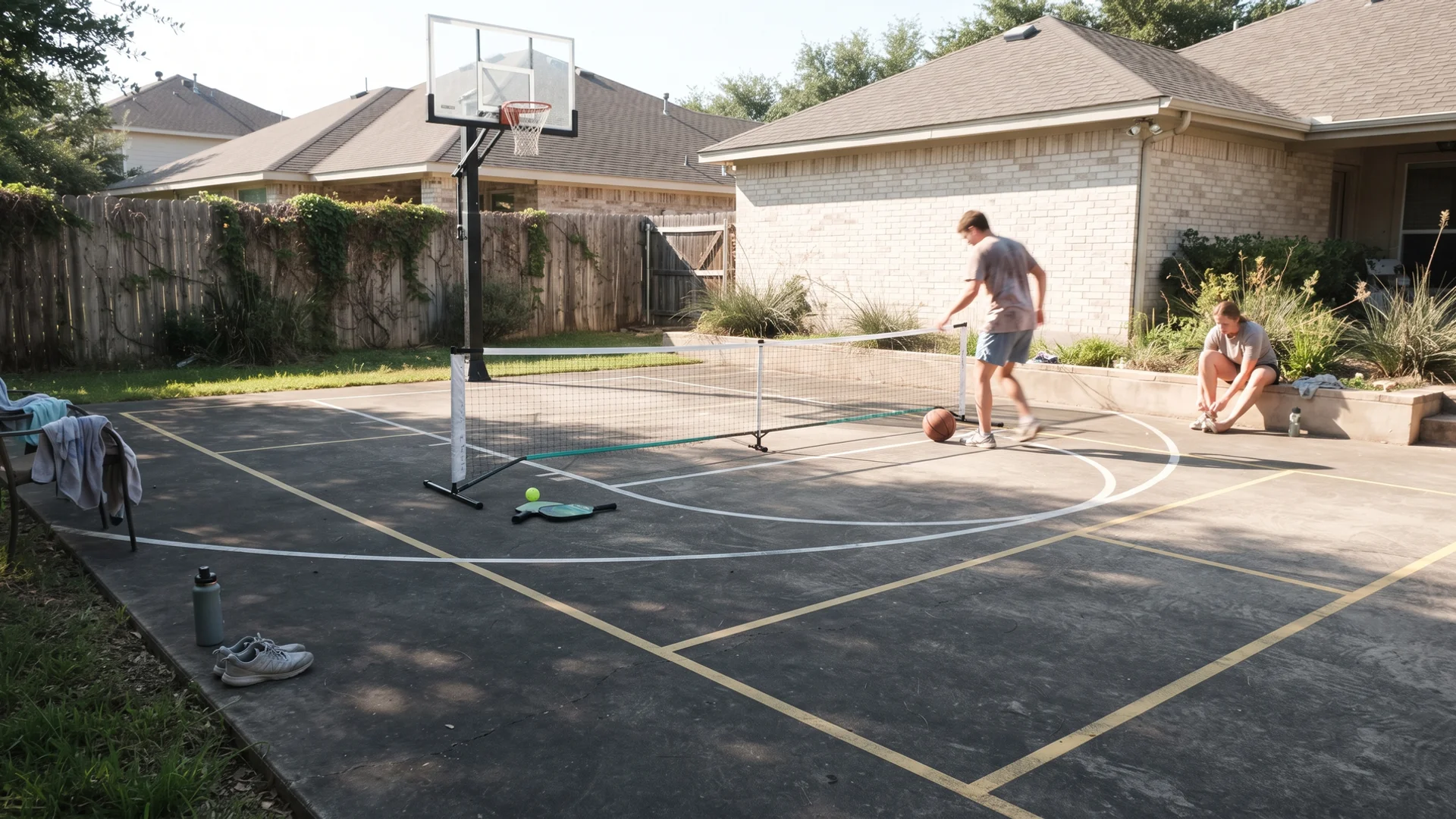
Multi-Sport Court Construction
Combined court layouts that play multiple sports on a single engineered surface.
Learn more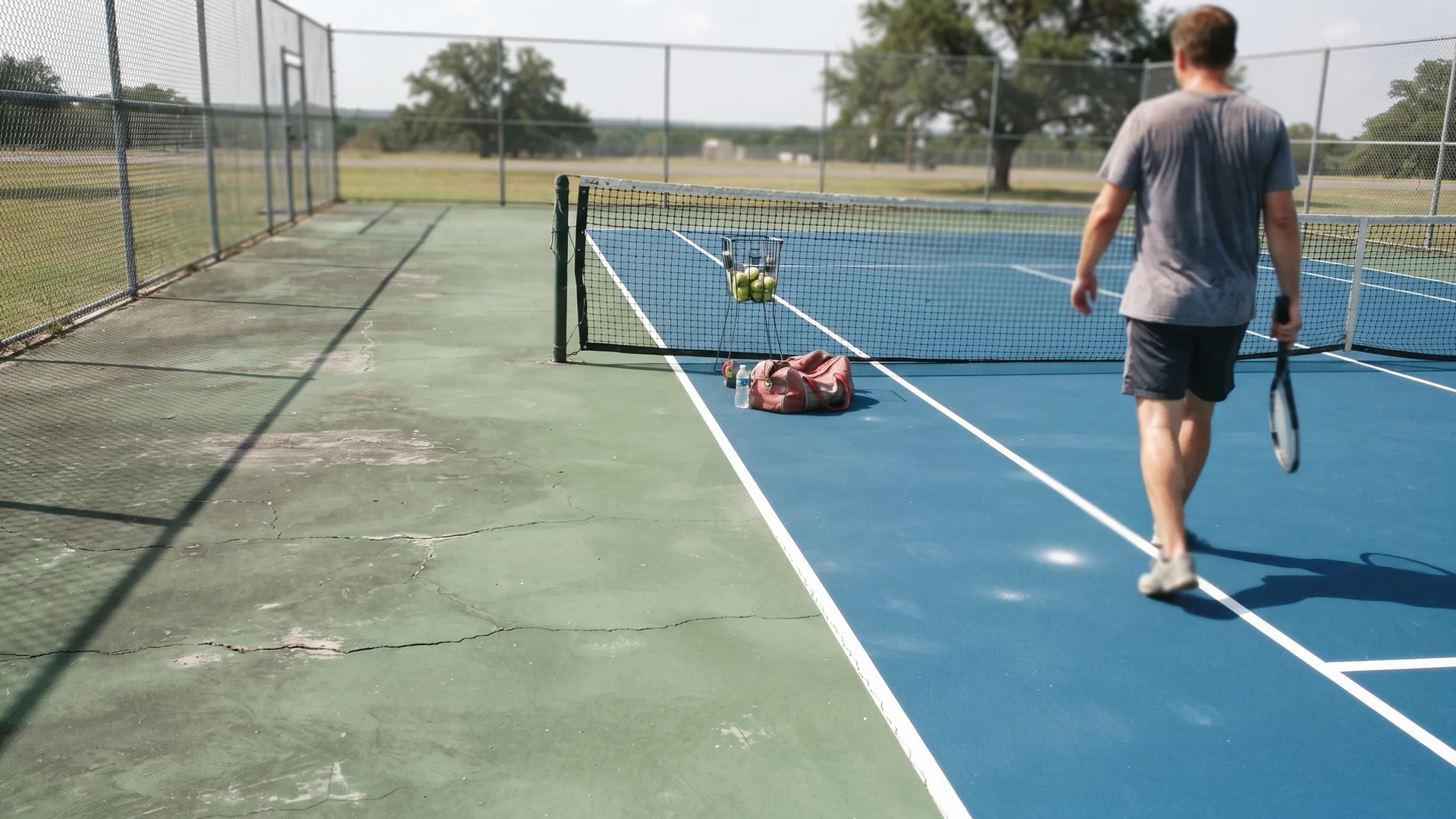
Court Resurfacing & Repair
Crack repair, leveling, re-striping, and fresh acrylic resurfacing for worn or damaged courts across DFW.
Learn more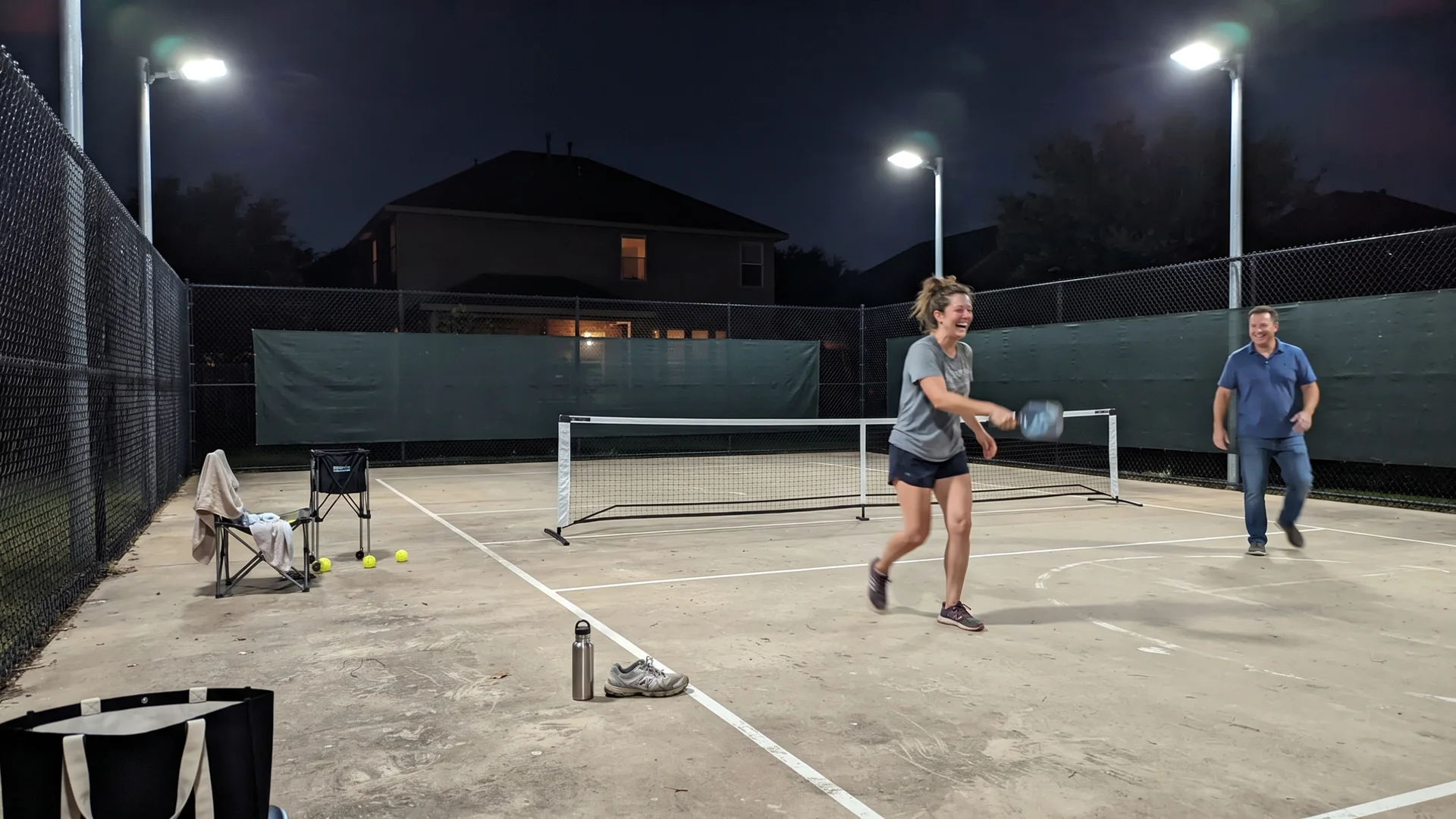
Court Lighting & Fencing
Professional LED lighting, security fencing, windscreens, and noise mitigation for sport courts across DFW.
Learn more
Ready to Start Your Pickleball Courts Project?
Book a free on-site consultation and 3D design. You get a flat-rate, all-inclusive pickleball court construction quote with no hidden fees.
- 325+ courts built across Texas
- Free HOA permitting handled
- Flat-rate pricing, no hidden fees