Most people start thinking about a backyard court in March, when the weather turns nice and everyone is outside again. It is an entirely understandable instinct, and it is about six months late.
If you want to be playing next spring, September through November is the window. Here is why fall is genuinely the best time to build a court in Dallas–Fort Worth, and it is not just about being comfortable on the jobsite.
Concrete Cures Better When It Is Not 105 Degrees
This is the real reason, and it is a technical one.
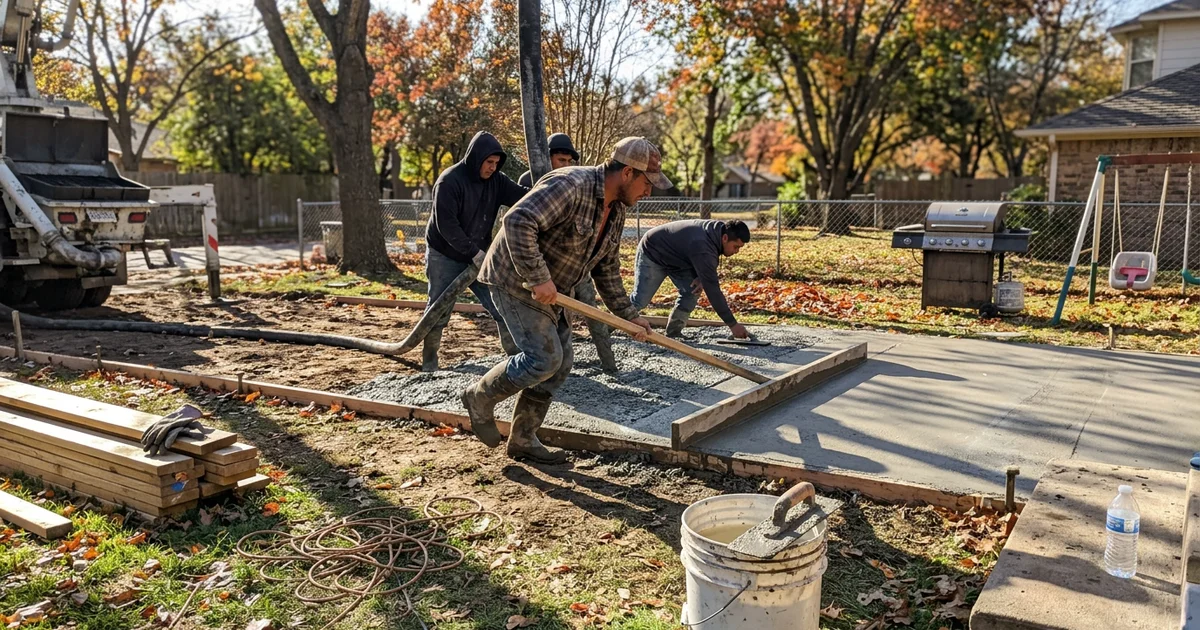
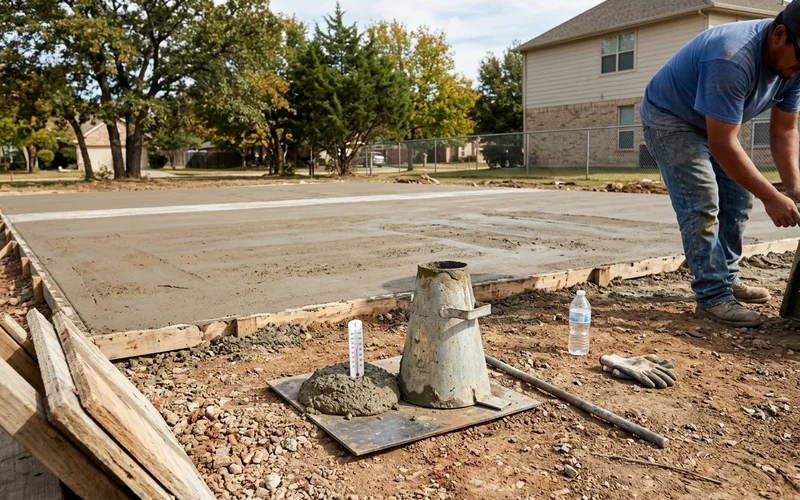
Concrete gains strength through hydration, a chemical reaction that needs water. In peak Texas summer, with air temperatures over 100 degrees and a slab surface considerably hotter than that, water leaves the mix faster than the reaction can use it. Crews respond with evaporation retarders, wet curing, and early morning pours, and a good crew manages it. But you are managing a problem rather than avoiding one.
In fall, daytime highs in the seventies and eighties and cool nights let a slab cure at its own pace. The hydration reaction runs to completion, and you get the strength the mix design was specified for.
The same applies to the acrylic surfacing that goes on afterwards. Acrylic coatings have a temperature window for application. Roll them onto a surface that is too hot and they flash off before they level, which shows up as texture inconsistency. Fall gives you long stretches where conditions sit comfortably inside that window.
Fall Rainfall Is Kinder Than Spring Rainfall
North Texas spring storms are dramatic. Large rain events, hail, and multi-day wet spells are normal from March through May, and any one of them can stop a pour and push a schedule.
Fall weather in DFW is generally drier and more predictable. There are still rain days, and we plan around them, but the pattern of long settled stretches makes it far easier to hold a 25 to 30 day build schedule.
There is also a soil argument. Blackland Prairie clay swells when saturated and shrinks as it dries. Excavating and compacting a sub-base during a stable moisture period gives a more consistent foundation than working in ground that has just absorbed four inches of rain.
Timing note for HOA properties
If your community requires architectural review, add three to six weeks before construction can start. A September enquiry typically means an October or November build. A January enquiry often means March, which is the exact window you want to avoid.
You Skip the Spring Queue
The other half of this is scheduling, and it is entirely predictable.
Enquiries surge in February and March, when the first warm weekend arrives and everyone decides this is the year. By April, every reputable court builder in the metroplex has a backlog. You are not just waiting for a build slot; you are waiting behind everyone else who had the same thought on the same Saturday.
Book in fall and you are choosing from an open calendar rather than taking whatever is left.
Your Court Is Ready When You Actually Want It
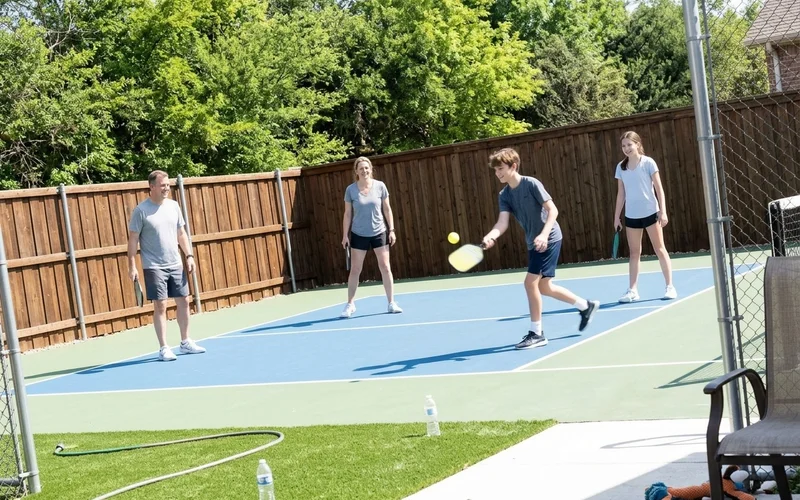
This is the part people underestimate. A court finished in November is fully cured, fully settled, and ready the first genuinely pleasant weekend in March.
A court started in March is finished in late April at the earliest, and that is with approvals already in hand. You have then missed the best playing weather of the year and you are heading into the part of the Texas calendar where the court is comfortable before nine in the morning and after eight at night.
There is a small bonus too. Building in fall gives the surface a mild, low-UV period to settle before it faces its first Texas summer, which is the gentlest possible start for a new acrylic finish.
What the Fall Timeline Looks Like
| Stage | Typical duration | If you start in September |
|---|---|---|
| Discovery call and on-site measure | About a week | Mid September |
| 3D design and approval | 1–2 weeks | Late September |
| HOA review and city permitting | 3–6 weeks | Through October |
| Construction | 25–30 days | November |
| Ready to play | — | Cured and waiting for spring |
Every one of those stages except the last is something we handle. The permitting and HOA work is free with the project, and the construction window is the same 25 to 30 days it is at any time of year, because we run one in-house crew with no subcontractor handoffs to wait on.
If You Have Already Missed Fall
Winter builds in North Texas are entirely workable. Our crews build through December, January, and February, working around the handful of genuine freeze days. Cold slows concrete cure rather than damaging it, and we adjust the schedule accordingly.
The season we would steer you away from is deep summer, and even then we build plenty of courts in July with the right precautions. It is simply the time when you are managing conditions rather than working with them.
But if you are reading this in September and you have been thinking about a court for a while, this is the window. Get the on-site measurement booked now, use October for approvals, and be finished before the holidays.
Want to be playing by spring? — Book a free on-site consultation and 3D design
Brandon Fiume
Founder & Company Representative
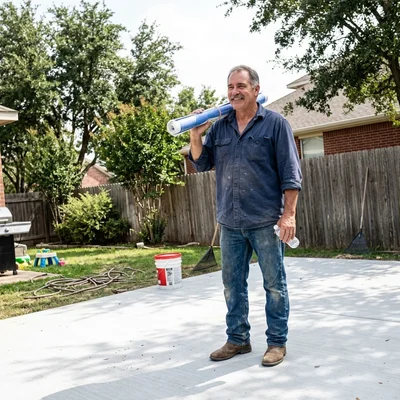
Brandon Fiume is the founder of Pickleball Court Installers of Dallas, leading an in-house team with 37+ years of combined background across construction, fitness, and sports. He has overseen 325+ turnkey court builds across Texas, specializing in post-tension slab engineering for North Texas clay soil.
37+ Years Combined Construction & Sports Background
Read more about Pickleball Court Construction
Specifications, pricing, and completed projects across DFW.