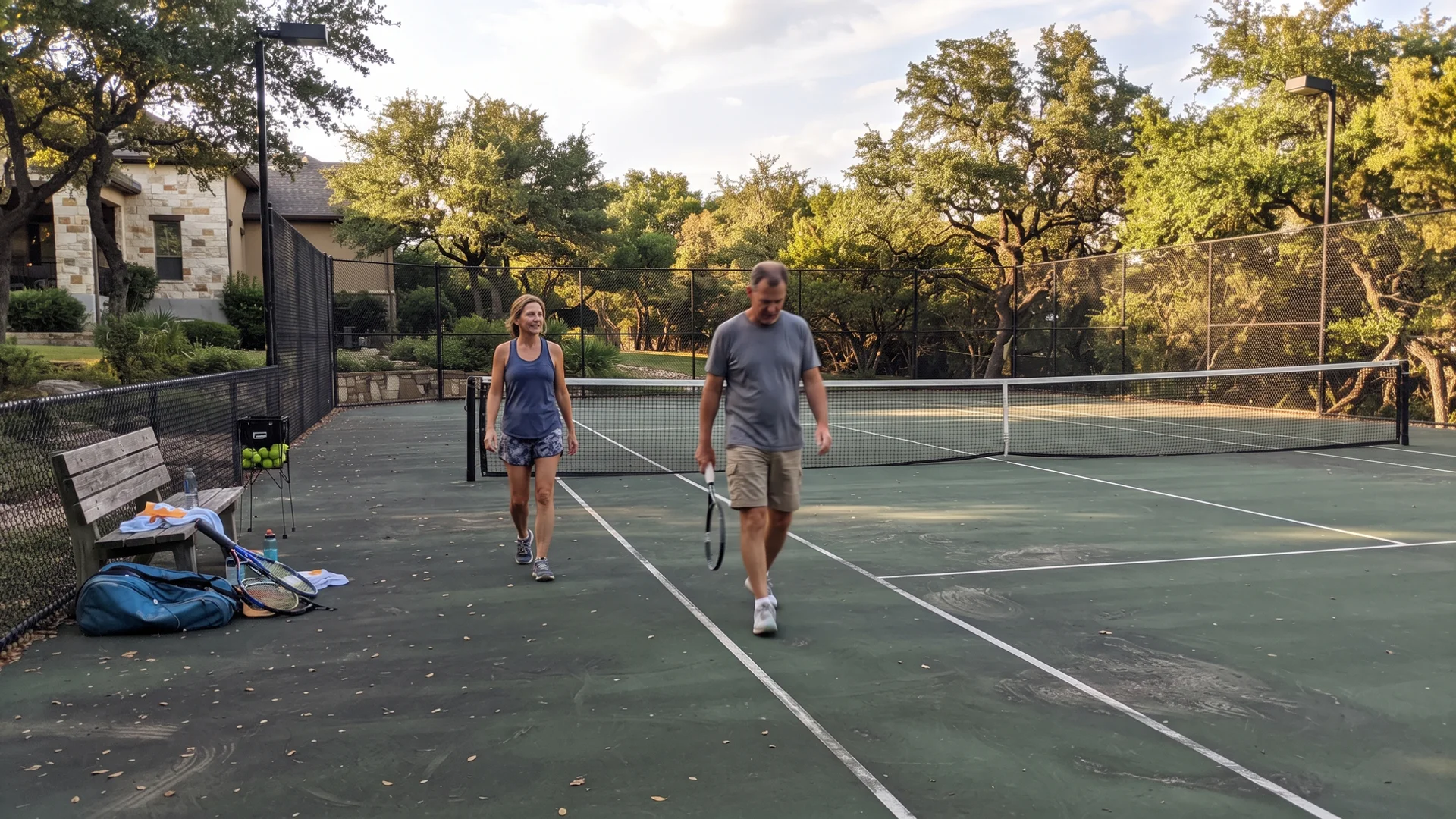
Home & Residential Tennis Court Construction in DFW
Full-size professional and space-saving mini tennis court construction for North Texas homes.
- Licensed & insured
- 325+ courts built
- 25–30 Days builds
- Free HOA handling
What a Properly Built Home Tennis Court Requires
A tennis court is the largest thing we build. The slab alone is roughly four times the area of a pickleball pad, which means every engineering decision matters more and every shortcut shows up faster.
We build to International Tennis Federation (ITF) and United States Tennis Association (USTA) construction standards. The 36x78 court boundary is only part of the picture. The playing surface has to extend well past it so players can chase a deep ball without running into a fence. That is why the standard residential pad is 60x120 standard pad dimensions: 21 feet of run-off behind each baseline, 12 feet either side.
Undersized surrounds are the single most common compromise on residential courts, usually made to squeeze a court onto a lot that cannot really take one. Players notice on the first deep return. If your property will not comfortably take a 60×120 pad, a well-proportioned mini court is almost always a better outcome than a cramped full court.
Beneath the surface sits a post-tensioned slab-on-grade with properly placed expansion joints. Slab area and Blackland Prairie clay are a difficult combination: the bigger the pour, the more soil movement it has to absorb. Tensioned tendons hold the whole slab in compression so it behaves as one engineered unit.
Common Problems We Solve
Water sitting along the net line
Courts poured with a side-to-side fall from the net hold water in the middle. The USTA standard is a 1:120 continuous cross-slope, a single unbroken plane across the whole court. It sheds water fast without changing how the ball plays on either side.
Playing into the sun every evening
Court orientation is decided once and lived with forever. A north-south alignment keeps low sun out of players’ eyes at the hours people actually play. We model it during 3D design, before the lot geometry dictates the answer by default.
Fences that come down in a gust front
Solid windscreen mesh catches wind like a sail. North Texas storm gusts take those fences down regularly. Windbreak screens with blowout vents relieve the pressure instead of transferring it into the posts.
Nets that sag by the second season
A net is only as good as its tensioning hardware. We fit a turnbuckle net cable tensioner and a center net tie-down anchor set into the slab, so the net holds regulation height at the centre through a full season of play.
Full-Size, Mini, and What Fits Your Lot
Not every property can take a full court, and pretending otherwise produces bad courts. There are two honest options.
A full-size build on a 60×120 pad gives you a genuine tennis court with proper run-off, suitable for serious play and for coaching. It needs real space, and on most DFW lots that means an acreage property in Prosper, Southlake, Colleyville, or the larger Flower Mound and McKinney estates.
A mini court is a proportionally reduced layout that still plays properly for rallying, practice, and junior tennis. It fits where a full court cannot, and it costs meaningfully less because the slab and surface area are smaller. Plenty of families find it gets used more than a full court would, because it leaves room in the yard for everything else.
We measure free, model both where they are feasible, and tell you which one we would build on our own property.
Surfaces, Cushioning, and Add-Ons
The standard finish is a 100% acrylic colour-coat system over the cured slab: adhesion promoter, acrylic resurfacer with graded silica sand for texture, colour coats, then regulation ITF line work. It gives a consistent medium-pace surface that holds colour through Texas UV.
Cushioned acrylic is the upgrade worth understanding. Rubber-granule layers beneath the colour coats soften impact underfoot, which makes a real difference if you play several times a week or have joint concerns. It slows the ball slightly and costs more. For occasional players the standard system is the right call; for regular players it is often the best money on the whole project.
Fencing and lighting round out most builds. Ten-foot perimeter fencing keeps ball retrieval sane, and dark-sky compliant LED floodlighting on galvanised poles turns a court you can use for three hours in a Texas summer evening into one you can use all evening. Both are far cheaper included in the original build than retrofitted once the ground is closed up.
Transparent Pricing
How Much Does Tennis Courts Cost in Dallas?
Every project is quoted flat-rate and all-inclusive after a free on-site consultation. The ranges below are typical turnkey pricing, not a starting point that grows once we arrive.
Mini Court
space-saving layout for tighter lots
- Space-saving mini court footprint
- Post-tension slab with cross-slope drainage
- 100% acrylic colour-coat surface
- Regulation-proportioned line striping
- Net posts and turnbuckle cable tensioner
- Free HOA permitting handled
Full-Size Court
standard 60×120 pad, 36×78 court
- Full 60×120 pad with 36×78 court boundary
- ITF/USTA construction standards
- 1:120 continuous cross-slope drainage
- 7-layer acrylic surface with expansion joints
- Centre net tie-down anchor
- 3D design preview before construction
Full Court + Enclosure
fencing, windscreens and LED lighting
- Everything in the full-size court build
- 10-foot perimeter fencing with gate
- HDPE windbreak screens with blowout vents
- Dark-sky compliant LED floodlighting
- Galvanised steel lighting poles on engineered footings
- Optional cushioned acrylic surface upgrade
Full-size tennis courts carry the largest slab and surface area of anything we build, which is what drives the range. Mini courts sit well below the entry figure. Fencing, windscreens, and LED lighting are the most common additions. Flat-rate all-inclusive quote after a free on-site consultation.
Why Choose Us
Why DFW Trusts Us With Tennis Courts
Built to ITF and USTA standards
A 36×78 court boundary on a 60×120 pad, with the run-off and side clearance the International Tennis Federation specifies. Undersized surrounds are the most common shortcut on residential courts and the one players notice immediately.
Cross-slope engineered, not guessed
A continuous 1:120 cross-slope is the USTA standard. Too flat and water sits. Too steep and the ball behaves differently on each side. We set the fall before the forms go in.
Post-tension slab for clay movement
A tennis slab is the largest single pour we do, which makes it the most vulnerable to soil movement. Tensioned tendons and properly placed expansion joints keep it intact.
Orientation planned for the sun
A north-south court orientation keeps the low sun out of players' eyes at the times people actually play. We model it during 3D design rather than just fitting the court to the lot lines.
Windbreak screens that survive storms
HDPE windscreens with blowout vents relieve pressure in a North Texas gust front instead of taking the fence down with them. It is a detail that saves a fence replacement.
One in-house crew, one contact
Excavation, concrete, surfacing, net systems, fencing, and lighting all handled by the same team. No coordinating four trades on the largest build in your yard.
Our Process
How Our Tennis Courts Work Runs
- 01
Site assessment
A full court needs real space. We measure the lot, check fall direction, tree canopy, and setbacks, and confirm what is achievable.
- 02
3D design
Court orientation matters on tennis more than any other sport. We model sun angle, fencing, and surrounds on your property.
- 03
Permits & HOA
Fence height and lighting are the two review items. We prepare and submit the packet free and answer committee questions.
- 04
Excavate & pour
Site cut, compacted base, vapour barrier, post-tension cables, then a monolithic pour set to a 1:120 continuous cross-slope.
- 05
Surface & stripe
Acrylic resurfacer, colour coats, and regulation ITF line work laid to tournament tolerance once the slab has cured.
- 06
Net, fencing & walkthrough
Net posts, turnbuckle cable tensioner, centre tie-down anchor, then fencing and lighting if specified, then handover.
How Installers of Dallas Compares
| Feature | Typical Contractor | Installers of Dallas |
|---|---|---|
| Court standard | Approximate dimensions | ITF / USTA specification |
| Drainage | Flat pour, surface runoff | 1:120 continuous cross-slope |
| Slab construction | Rebar-poured slab-on-grade | Engineered post-tensioned slab |
| Windscreens | Solid mesh, no vents | HDPE with blowout vents |
| Surface system | Colour coats only | Full acrylic system, cushion optional |
| Permitting | Homeowner's responsibility | Handled free, every project |
Not sure Tennis Courts is the right fit?
We will measure your site free and tell you honestly what works. No obligation, no pressure.
Our Work
Recent Tennis Courts Projects
A sample of completed work across Dallas–Fort Worth. Click any image to enlarge.
Client Reviews
What Customers Say About Our Tennis Courts
“Our old tennis court was cracking and pooling water after every storm. They diagnosed the drainage issue, leveled the low spots, and resurfaced it to look brand new. Flat-rate quote, no surprises.”
“The iron fencing and the lighting both cleared review first pass. They clearly knew what Southlake was going to ask for before we did.”
“They oriented the court north-south so we are not staring into the sun at six in the evening. Nobody else even raised it.”
Common Questions
Tennis Courts FAQs
How much space does a tennis court need?
How much does a residential tennis court cost?
What is the right slope for a tennis court?
Which way should my court face?
Can you convert my tennis court to pickleball?
What is cushioned acrylic and do I need it?
Do I need fencing around a home tennis court?
How long does a tennis court take to build?
What maintenance does an acrylic tennis court need?
Can you build a court on a sloped lot?
Still have a question?
Tell us about your property and we will answer it on a free on-site consultation.
Ask Our TeamTennis Courts Guides
Detailed answers to the questions people ask before they commit to a build.
Full-Size vs. Mini Tennis Court for Residential Lots
Compare space, cost, and real-world use for a full-size versus mini tennis court on a residential lot, and when a multi-sport court makes more sense in DFW.
Building a Home Tennis Court: What the Process Involves
Site prep, post-tension slab, surfacing, striping, and net posts. See the full home tennis court construction process and realistic timeline in Dallas–Fort Worth.
Regulation Tennis Court Dimensions and Space Requirements
A tennis court is 36×78 ft of play on a 60×120 pad. Learn net heights, cross-slope, and the fencing footprint before building a home court in Dallas–Fort Worth.
Try Our Free Sport Court Cost Estimator
Estimate the ballpark cost of your custom sport court based on court type, size, and add-ons before you request a formal quote.
Use CalculatorRelated Services
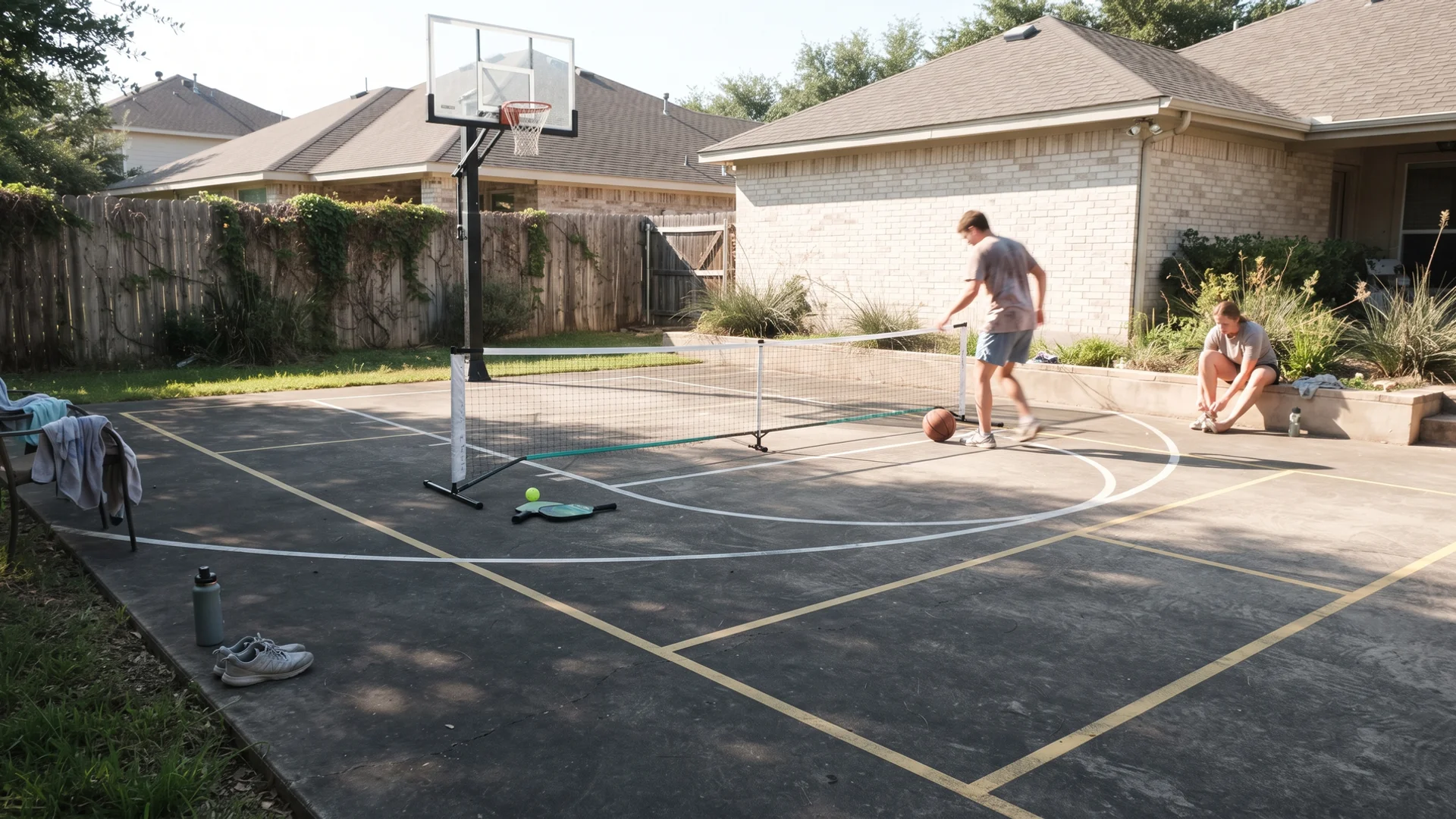
Multi-Sport Court Construction
Combined court layouts that play multiple sports on a single engineered surface.
Learn more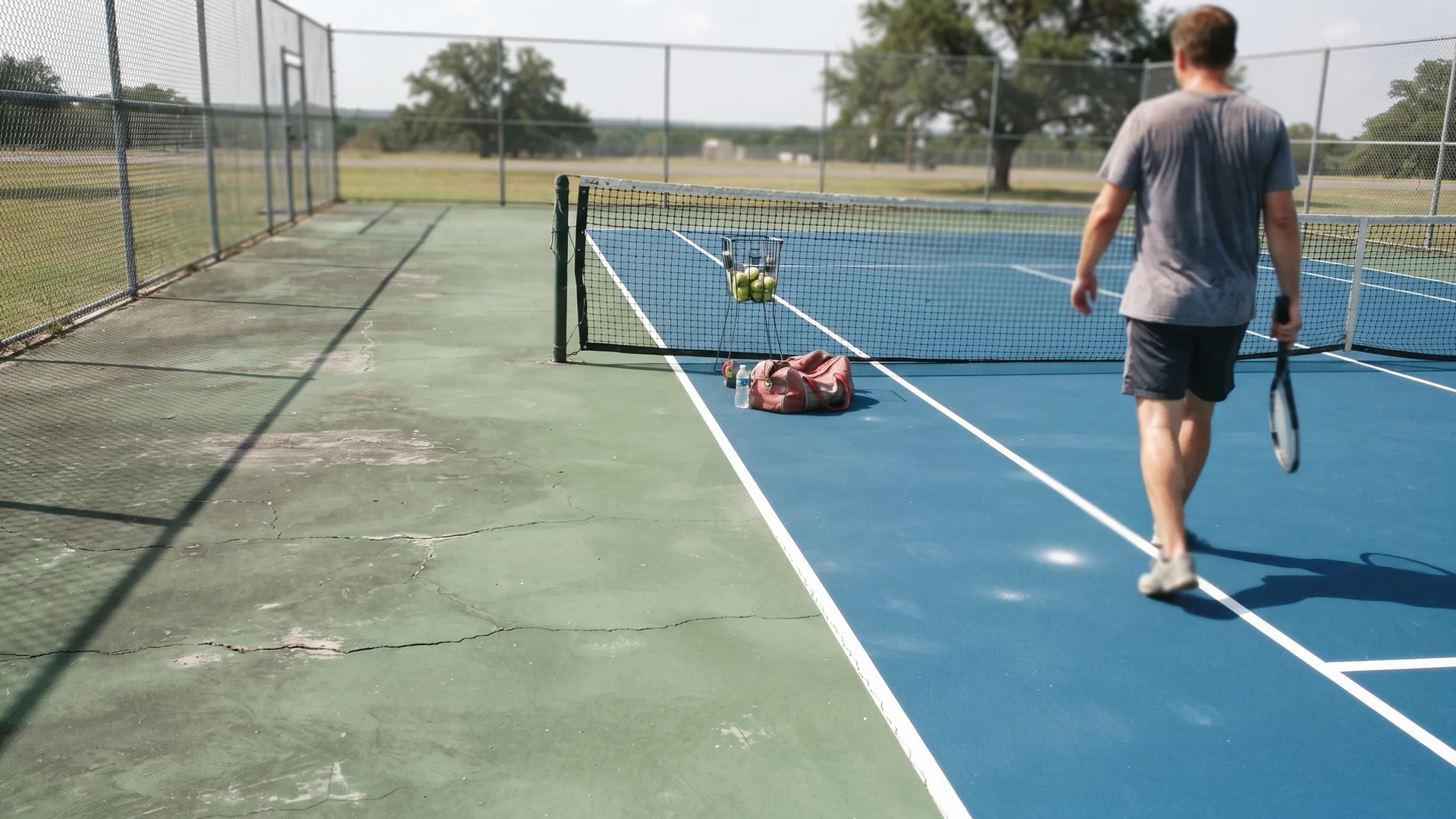
Court Resurfacing & Repair
Crack repair, leveling, re-striping, and fresh acrylic resurfacing for worn or damaged courts across DFW.
Learn more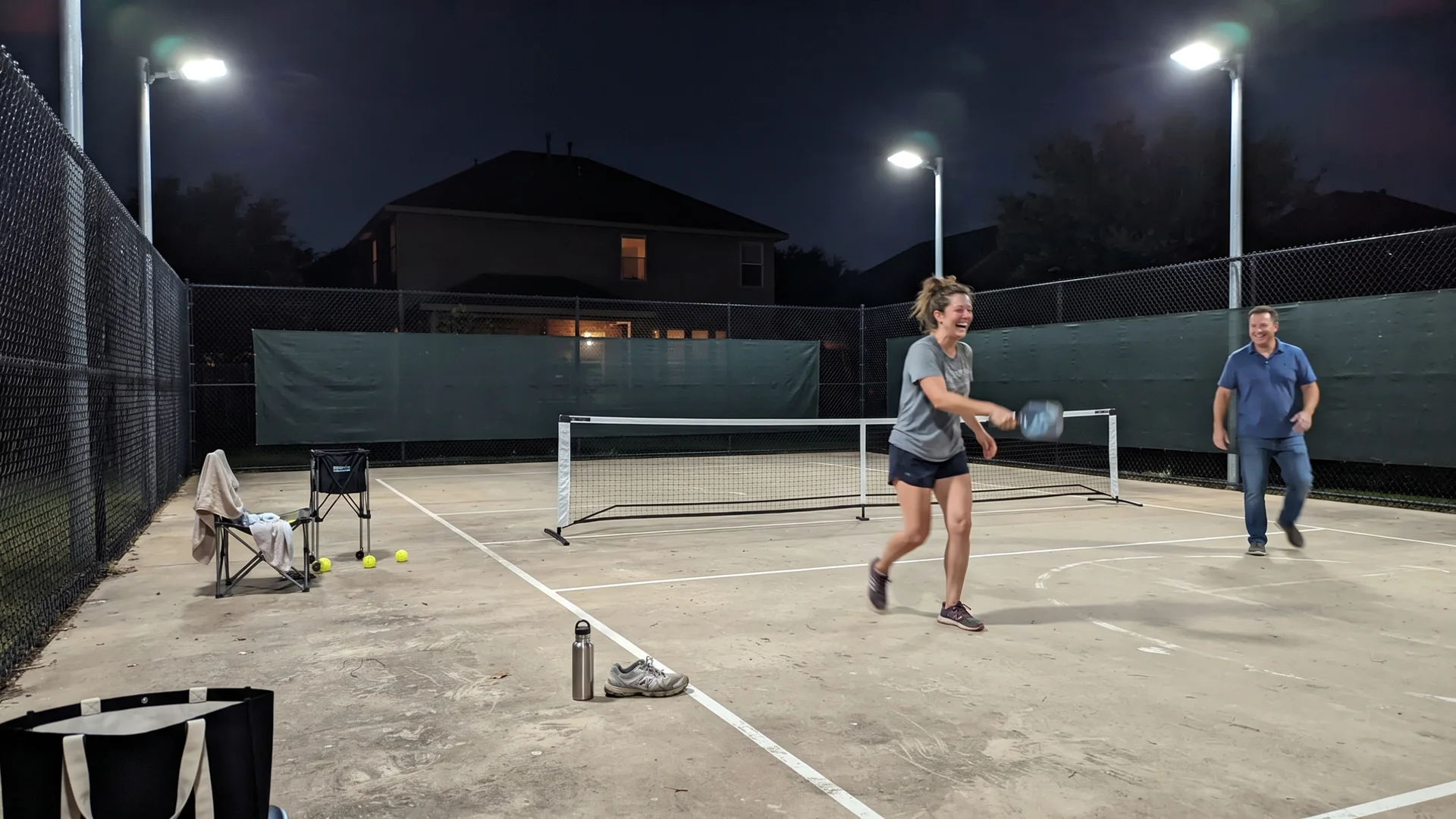
Court Lighting & Fencing
Professional LED lighting, security fencing, windscreens, and noise mitigation for sport courts across DFW.
Learn more
Ready to Start Your Tennis Courts Project?
Book a free on-site consultation and 3D design. You get a flat-rate, all-inclusive tennis court construction quote with no hidden fees.
- 325+ courts built across Texas
- Free HOA permitting handled
- Flat-rate pricing, no hidden fees