The Ranges, Honestly
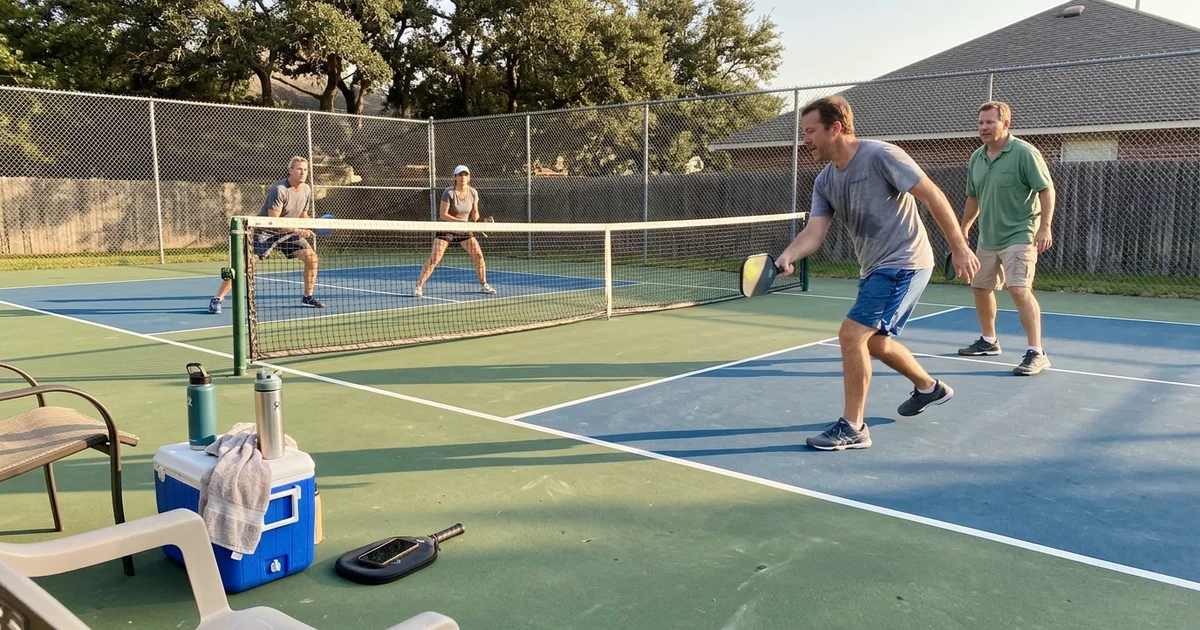
A turnkey pickleball court in Texas typically runs $25,000 to $55,000, and that spread is not padding. It reflects genuine differences in what gets built and what the site demands.
At the lower end sits a single court on a straightforward flat site with good access, finished with the standard acrylic system and a net set, without fencing or lighting.
At the upper end sits a court with perimeter fencing, windscreens, dark-sky compliant LED floodlighting, acoustic barrier treatment, or a site that needs substantial earthworks and drainage correction before anything else can happen.
Both are the same court in the sense that matters. Both sit on an engineered post-tension slab with a seven-layer acrylic surface and regulation striping. The difference is scope and site.
Where the Money Actually Goes
People assume the surface is the expensive part because it is the part you see. It is not.
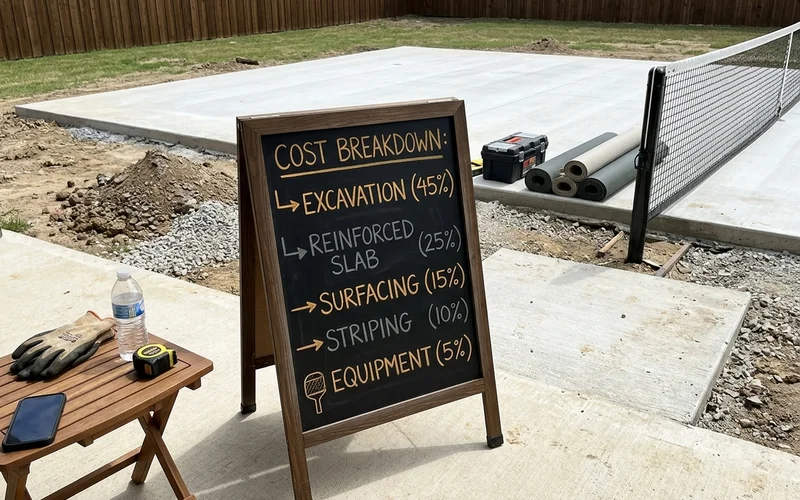
Site preparation and excavation. Cutting the pad to depth, removing or redistributing spoil, laying and compacting the aggregate sub-base, and correcting drainage. On a flat, accessible lot this is straightforward. On a sloped site, or one where a truck cannot reach the back yard, it grows considerably.
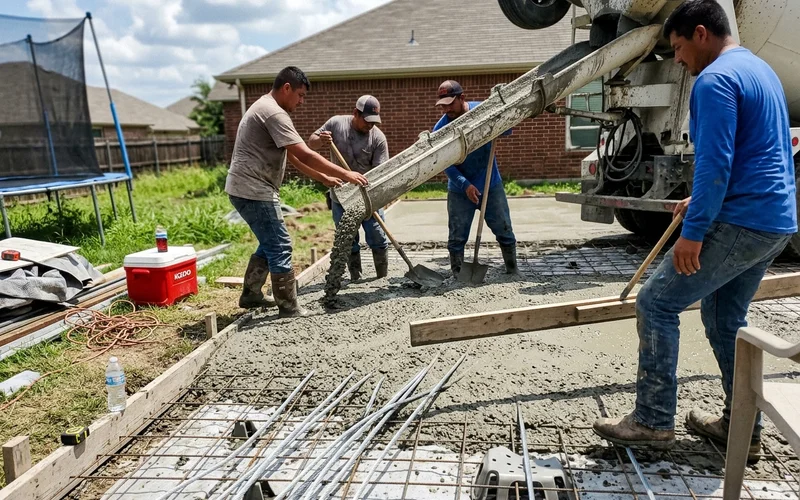
The engineered slab. Vapour barrier, post-tension tendons, perimeter grade beam, concrete, and the stressing operation. This is consistently the largest single line item, and it is the one you cannot renew later. Everything above it can be refreshed; the slab is poured once, which is why courts here are engineered for Texas clay soil rather than poured on a standard patio spec.
Surfacing and striping. Adhesion promoter, acrylic resurfacer coats with graded silica sand, colour coats, and regulation line work. Meaningful cost, and the component that gets renewed every six to ten years.
Equipment. Net posts set in footings, internal-wind brass tensioner, centre strap anchor.
Add-ons. Fencing, windscreens, lighting, acoustic barriers, and turf surrounds. These are genuinely optional and they are where the top of the range comes from.
Typical Configurations and What They Include
| Configuration | Typical range | What is included |
|---|---|---|
| Single court | From $25,000 | 30×60 pad, post-tension slab, 7-layer acrylic, regulation striping, net system |
| Court with enclosure | Around $38,000 | The above plus perimeter fencing, gate, windscreens, optional acoustic barrier |
| Multi-court or lit | Up to $55,000 | The above plus LED floodlighting on engineered pole footings, or a two-court bank with shared walkway |
Every figure is turnkey and includes free HOA permitting and approval handling, which some builders charge for separately or leave with you entirely.
What Moves a Quote Up or Down
Five things account for nearly all the variation between two courts of the same nominal type.
Access. Whether a concrete truck and excavation equipment can reach the build area determines how much work is done by machine and how much by hand. Restricted access is the most underestimated cost factor in residential court construction.
Slope and earthworks. A significantly sloped lot may need cut and fill, and occasionally a retaining structure. We assess volumes during the site visit and price them into the flat-rate quote so it is not a later change order.
Drainage correction. If the yard currently drains toward the house or ponds in the proposed court area, that has to be solved before the slab goes in.
Existing conditions. Old concrete to break out, tree roots to work around, irrigation or private utility runs to locate and reroute.
Scope choices. Lighting is the single largest optional add. Fencing material is the next, with ornamental iron costing substantially more than chain-link.
Why Comparing Quotes Is Harder Than It Looks
Two quotes for the same court can differ by 30% and both be honest, because they describe different products.
The slab is where the gap usually sits. A conventional rebar-poured slab is meaningfully cheaper than an engineered post-tension slab, and quotes rarely spell out which one you are getting. In Blackland Prairie clay that difference determines whether your court is intact in year five.
Surfacing is the second gap. Two or three coats of court paint costs a fraction of a full seven-layer acrylic system, and on the day of handover both look excellent. The difference shows up as colour fade, texture polish, and early resurfacing.
Permitting is the third. If HOA submissions and city permits are billed separately, or left with you, that is real cost or real work that is not in the number you are comparing.
Three questions make quotes comparable: is the slab post-tensioned, how many acrylic layers are in the surface system, and is HOA and city permitting included. You can see how we answer all three in our pickleball court construction specification.
How We Price
We quote flat-rate and all-inclusive after a free on-site consultation and measurement. That visit is what lets us price site conditions accurately rather than building contingency into an estimate.
The number in the quote covers excavation through final walkthrough. It does not move afterwards unless you change the scope or we encounter something genuinely undisclosed, such as a private underground utility that no public locating service identified.
Financing is available if you would rather spread the cost, and we can talk through the options during the consultation.
If you want a real number for your property rather than a range from an article, you can get a flat-rate quote after a free site visit. It costs nothing and it is considerably more useful than a national average.