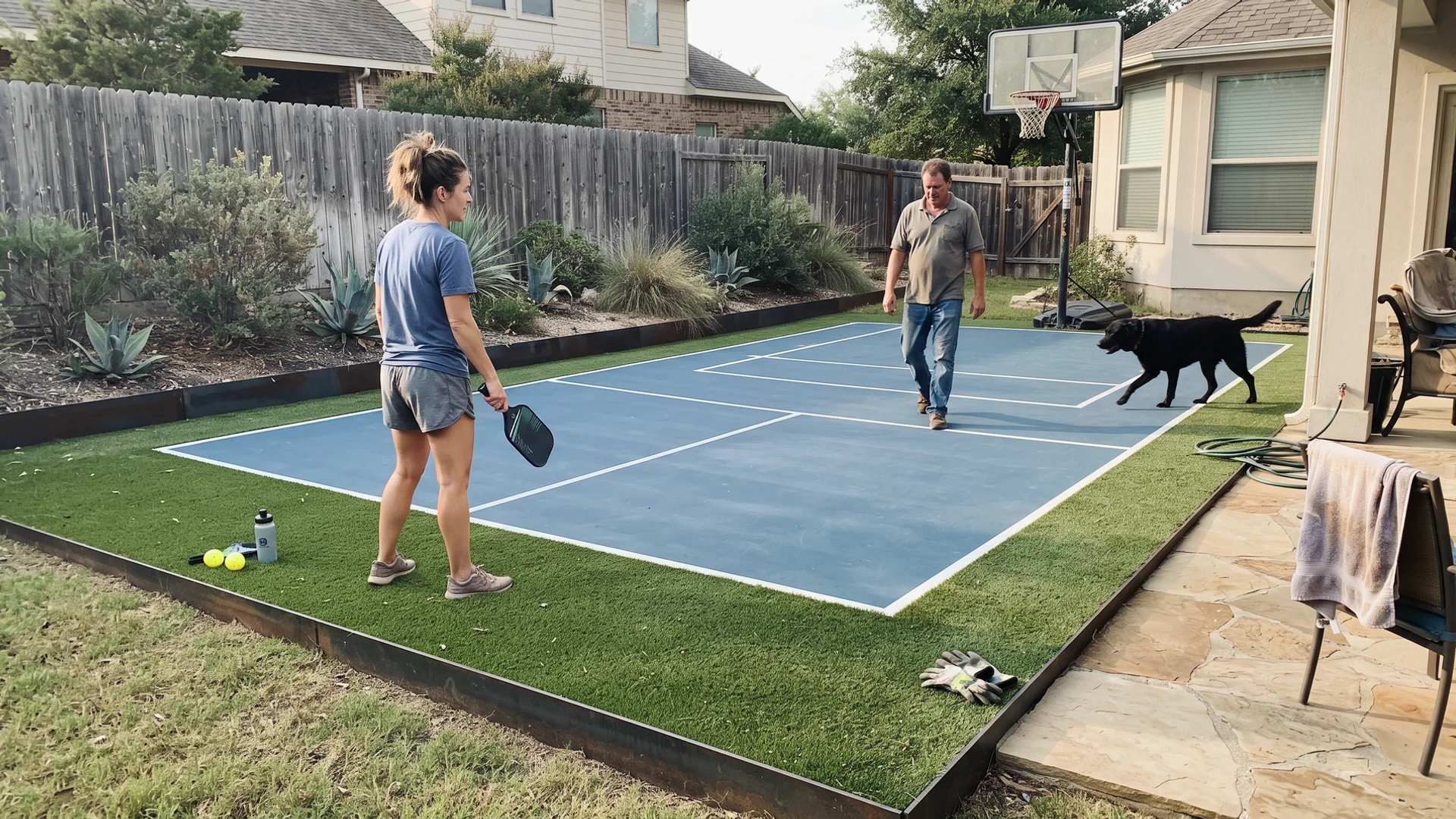
Artificial Turf Around & Integrated With Your Court in DFW
Custom artificial turf and synthetic grass installed around or integrated with your sport court.
- Licensed & insured
- 325+ courts built
- 25–30 Days builds
- Free HOA handling
The Strip Around a Court Is Where Lawns Give Up
Anyone who has built a backyard court knows what happens to the grass immediately around it. It takes constant foot traffic, it gets compacted, it never recovers, and after the first wet spring it becomes a mud ring that gets tracked onto the playing surface and into the house.
Artificial turf solves that permanently, and it does something else worth as much: it makes the court look like part of a designed backyard rather than a slab dropped into a lawn. A clean turf surround with border landscape edging gives you a straight, permanent line at the pad boundary, and that single detail is what most people notice about a finished project.
We install turf as a surround, as a wider play area, or as a full backyard replacement. The standard is the same in every case, and most of it is invisible once we finish.
Common Problems We Solve
Turf laid straight onto clay
This is the shortcut that ruins synthetic grass installations. Without a proper crushed aggregate sub-base, water has nowhere to go. It sits under the backing, the area smells within a season, and the surface settles unevenly. We excavate, lay compacted aggregate to the depth the drainage plan requires, and specify a dynamic drainage flow rate so water actually leaves.
Turf that fades and goes brittle
Cheap polypropylene turf does not survive Texas UV. It loses colour and the fibres stiffen after a few summers. Polyethylene monofilament fibers hold both colour and softness far longer, which is the difference between a surface that lasts five years and one that lasts fifteen to twenty.
Backing that traps water
A solid backing turns turf into a tarpaulin. Perforated polyurethane backing lets water through into the base where it belongs.
Odour in pet areas
Plain silica sand infill absorbs and holds what you do not want it holding. Antimicrobial infill (silica / Envirofill) manages odour instead, and paired with a free-draining base it is what makes turf genuinely workable for dogs.
Choosing the Right Turf for How You Will Use It
Turf is not one product. Pile height, fibre shape, density, colour, and infill all change how the surface feels and how it wears, and the right combination depends on what the area is for.
A pure court surround takes heavy foot traffic in a narrow band. It wants a dense, shorter pile that recovers well and does not flatten into obvious paths.
A play area for children wants a slightly longer pile for cushioning, with a softer infill. It also wants a base built with a little more depth, because it will take more than footsteps.
A pet area wants antimicrobial infill and maximum drainage capacity, because the drainage is doing more work than it is anywhere else.
A pure aesthetic lawn area can prioritise appearance: a blended colour with a thatch layer that reads convincingly as real grass from a few feet away.
We talk through actual use during the measure rather than quoting a single product for the whole yard. Different zones often want different specifications, and the joins between them are handled with seam turf adhesive and tape so they disappear.
Why It Is Better Done With the Court
Court construction and turf installation share almost all of the same site work. Excavation equipment is already on site. Levels and fall direction are already being set. The drainage plan for the pad already has to account for where water goes when it leaves the surface.
Doing both as one project means those decisions get made once, together, by one crew. The result is a finished backyard where the court fall, the turf drainage, and the surrounding grade all work as a single system, instead of a turf contractor trying to tie into levels somebody else set months earlier.
It is also cheaper, because the excavation and base work overlap rather than being mobilised twice. If turf is anywhere in your plans, the honest advice is to include it in the court quote even if you are unsure of the extent. It is far easier to adjust the turf area at design stage than to add it to a finished yard.
Transparent Pricing
How Much Does Artificial Turf Cost in Dallas?
Every project is quoted flat-rate and all-inclusive after a free on-site consultation. The ranges below are typical turnkey pricing, not a starting point that grows once we arrive.
Court Surround
turf strip around the court pad
- Crushed aggregate sub-base with drainage
- Polyethylene monofilament turf
- Antimicrobial infill
- Border landscape edging
- Clean transition to the court surface
- UV-stable, low-maintenance finish
Turf & Play Area
surround plus a usable lawn area
- Everything in the court surround
- Extended turf lawn area
- Perforated polyurethane backing
- Dynamic drainage flow rate specified
- Pet-friendly infill option
- Seam turf adhesive on all joins
Full Backyard Transform
court, turf, edging and landscaping
- Everything in the turf and play area package
- Full backyard turf coverage
- Integrated walkways and seating pads
- Custom cut-ins around planting and features
- Coordinated with your court colour scheme
- Single crew handling court and turf together
Turf pricing tracks square footage, how much excavation and sub-base work the area needs, and the turf specification you choose. Installing alongside a court build is cheaper because the excavation and base work overlap.
Why Choose Us
Why DFW Trusts Us With Artificial Turf
Drainage engineered, not assumed
A crushed aggregate sub-base with a specified dynamic drainage flow rate is what stops water sitting under turf. Turf laid straight on compacted clay holds water and starts to smell within a season.
Turf that survives Texas sun
Polyethylene monofilament fibres hold colour and stay soft under prolonged UV. Cheaper polypropylene products go brittle and fade noticeably after a couple of Texas summers.
Clean transitions to the court
The join between acrylic and turf is what makes the whole project look intentional. Border landscape edging gives a straight, permanent line rather than turf creeping over the pad.
Infill chosen for the use
Antimicrobial silica or Envirofill infill for general use, pet-specific options where dogs are involved. The infill is what keeps fibres upright and manages odour, and it is not one-size-fits-all.
One crew for court and turf
The same in-house team pours the slab and lays the turf, so excavation, levels, and drainage are planned as one project rather than two contractors working around each other.
Almost no maintenance
No mowing, no watering, no fertiliser, and no mud tracked into the house after a storm. An occasional rinse and a brush through high-traffic paths is the whole routine.
Our Process
How Our Artificial Turf Work Runs
- 01
Measure and plan
We map the turf area against the court footprint, check fall direction, and plan where water goes before anything is excavated.
- 02
Specify the turf
Pile height, fibre type, colour, and infill chosen for how the area will be used, whether that is play, pets, or pure surround.
- 03
Excavate and base
Existing surface removed, then a crushed aggregate sub-base laid and compacted to the depth the drainage plan requires.
- 04
Lay and seam
Turf rolled out, allowed to relax, then cut, seamed with adhesive and tape, and secured at every edge.
- 05
Infill and brush
Antimicrobial infill spread and power-broomed into the fibres so the pile stands up and the surface drains properly.
- 06
Edging and walkthrough
Border landscape edging set for a clean transition to the court and planting, then a walkthrough and care handover.
How Installers of Dallas Compares
| Feature | Typical Contractor | Installers of Dallas |
|---|---|---|
| Sub-base | Laid on existing soil | Crushed aggregate, compacted, drained |
| Fibre type | Polypropylene | Polyethylene monofilament |
| Backing | Solid backing, poor drainage | Perforated polyurethane backing |
| Infill | Plain silica sand | Antimicrobial infill, pet options |
| Edges | Tucked or stapled | Border landscape edging |
| Coordination | Separate turf contractor | Same crew as your court |
Not sure Artificial Turf is the right fit?
We will measure your site free and tell you honestly what works. No obligation, no pressure.
Our Work
Recent Artificial Turf Projects
A sample of completed work across Dallas–Fort Worth. Click any image to enlarge.
Client Reviews
What Customers Say About Our Artificial Turf
“Turf around the pad, iron fencing, warm surface colours. It looks like it belongs in the yard rather than being dropped into it.”
“No more mud tracked through the house after a storm. The kids and the dog are out there constantly and it still looks new.”
“The transition between the court and the turf is perfectly straight. That detail is what makes the whole backyard look finished.”
Common Questions
Artificial Turf FAQs
Why put turf around a sport court?
Does artificial turf get hot in Texas summers?
How does water drain through turf?
Is artificial turf safe for pets?
How long does artificial turf last?
What maintenance does it need?
Can turf be integrated into the court itself?
How much does turf installation cost?
Do you handle HOA approval for turf?
Can you install turf without building a court?
Still have a question?
Tell us about your property and we will answer it on a free on-site consultation.
Ask Our TeamArtificial Turf Guides
Detailed answers to the questions people ask before they commit to a build.
Related Services
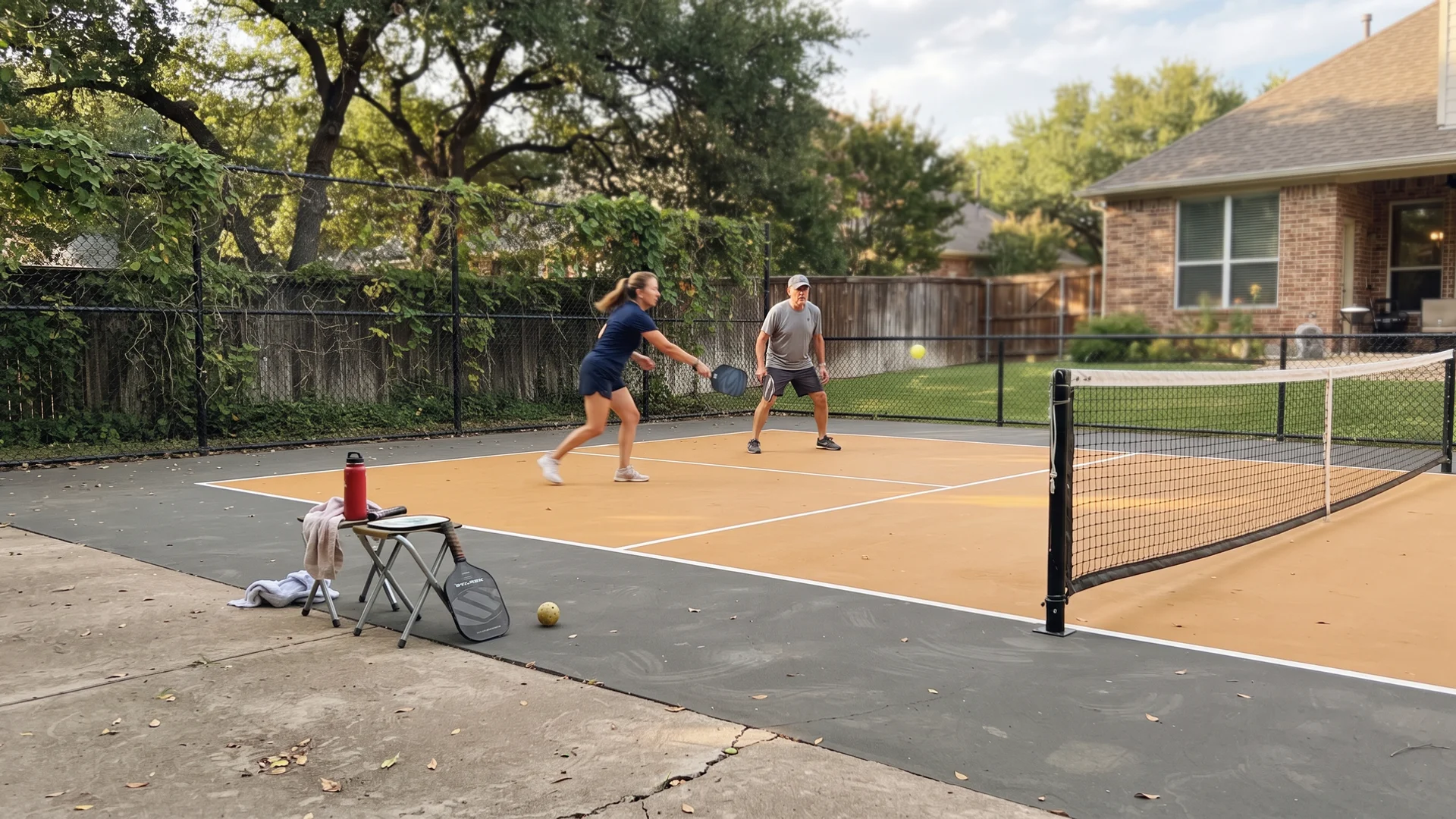
Pickleball Court Construction
Custom single and multi-court pickleball builds for backyard and commercial properties across Dallas–Fort Worth.
Learn more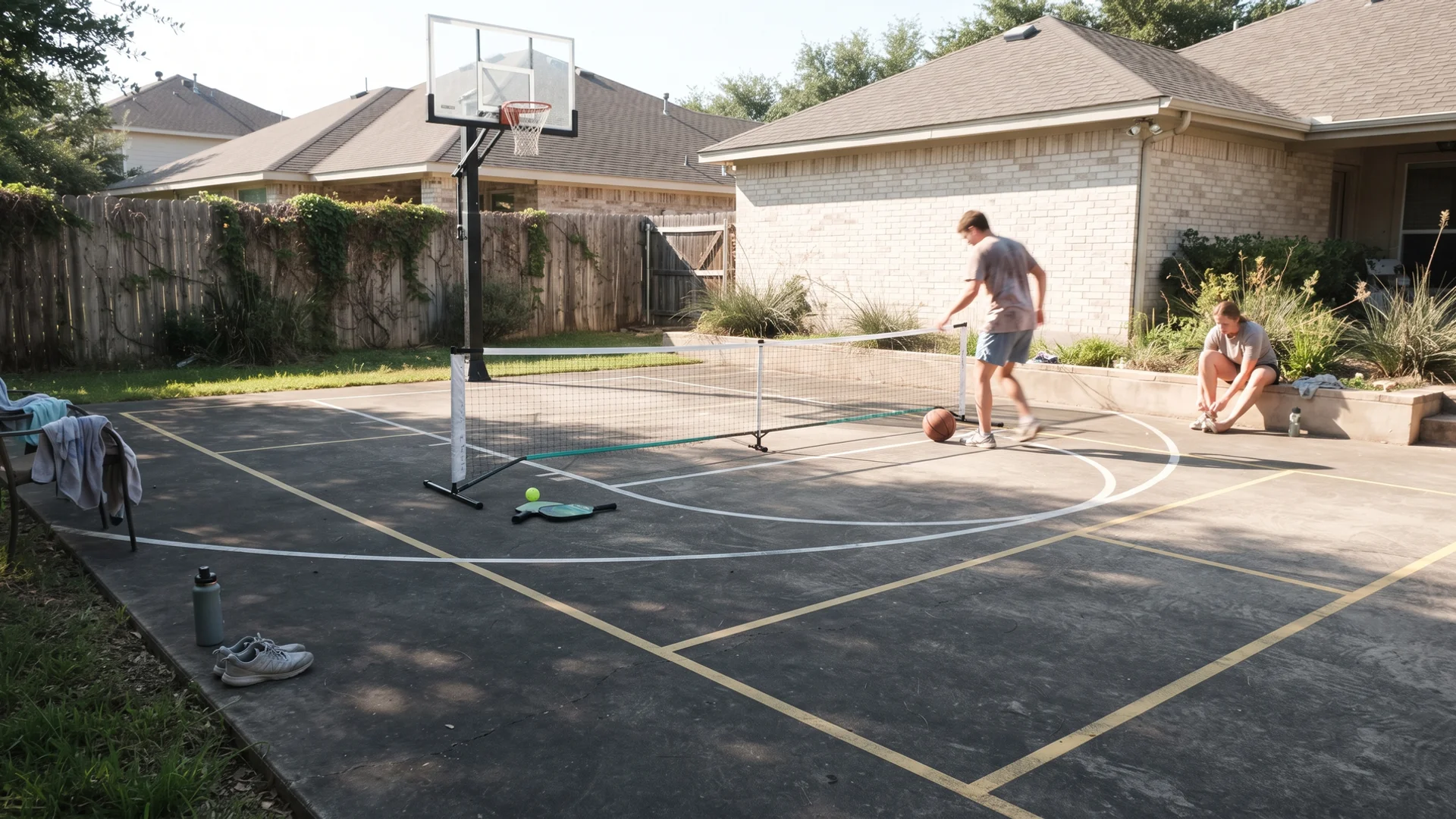
Multi-Sport Court Construction
Combined court layouts that play multiple sports on a single engineered surface.
Learn more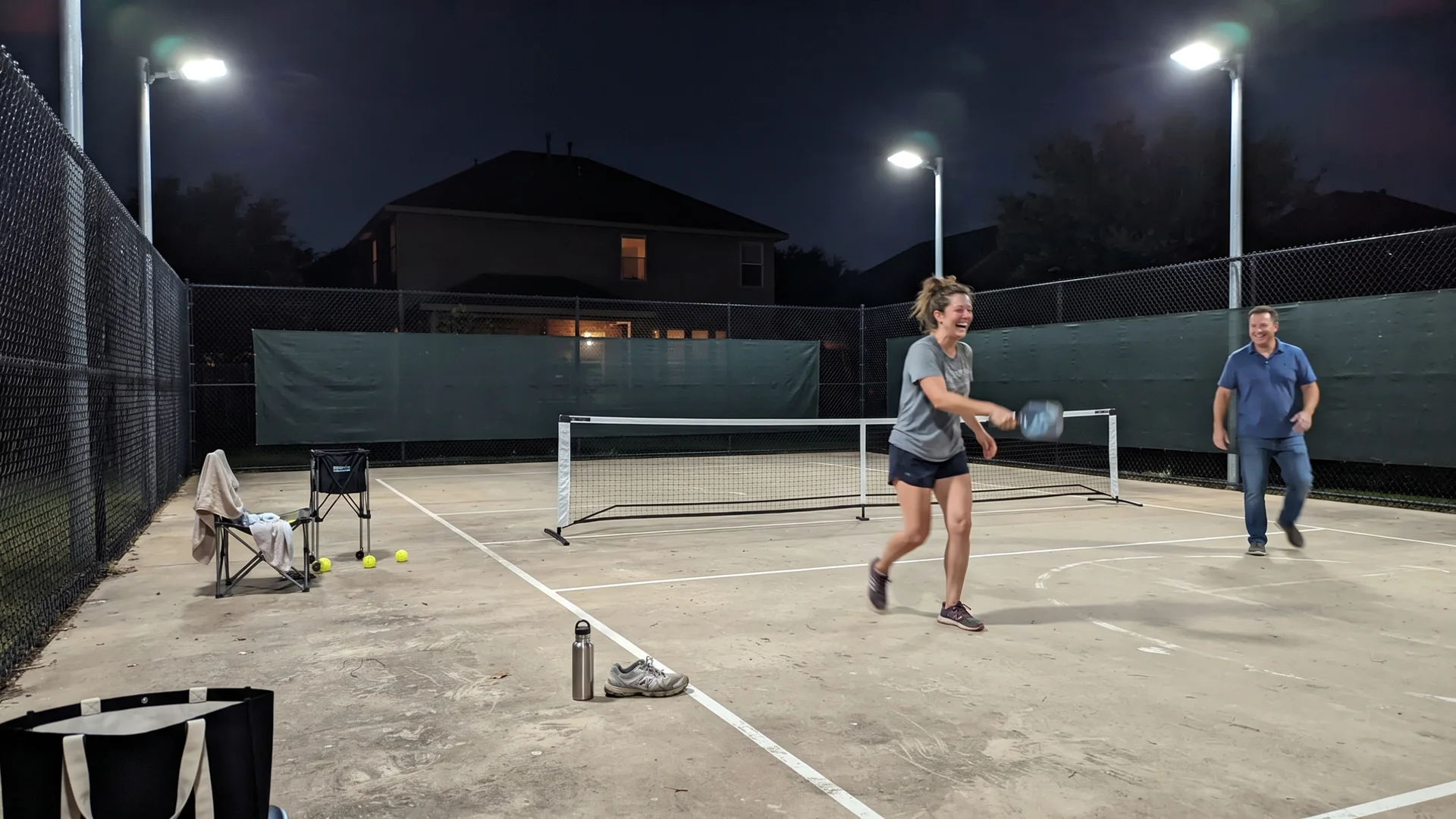
Court Lighting & Fencing
Professional LED lighting, security fencing, windscreens, and noise mitigation for sport courts across DFW.
Learn more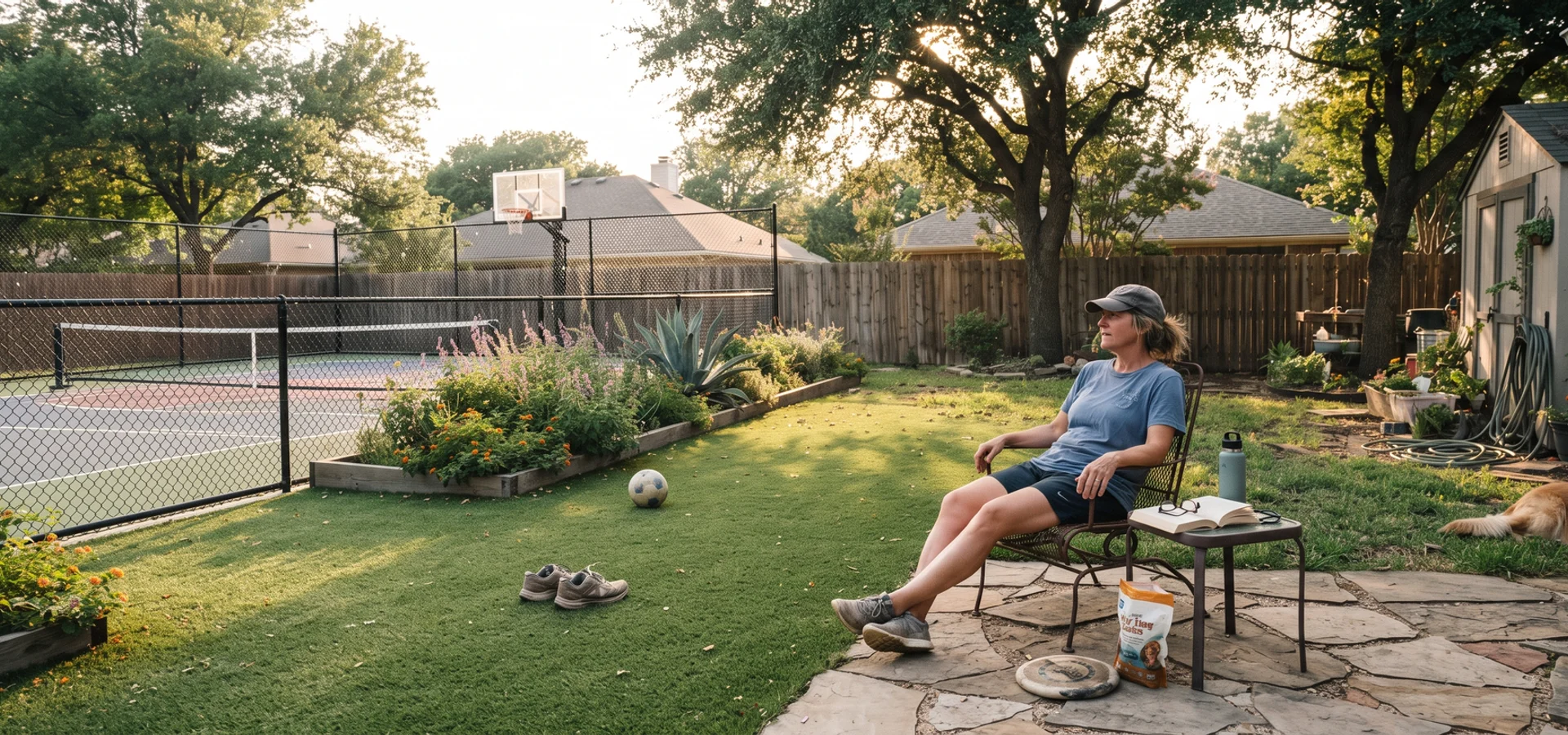
Ready to Start Your Artificial Turf Project?
Book a free on-site consultation and 3D design. You get a flat-rate, all-inclusive artificial turf installation quote with no hidden fees.
- 325+ courts built across Texas
- Free HOA permitting handled
- Flat-rate pricing, no hidden fees