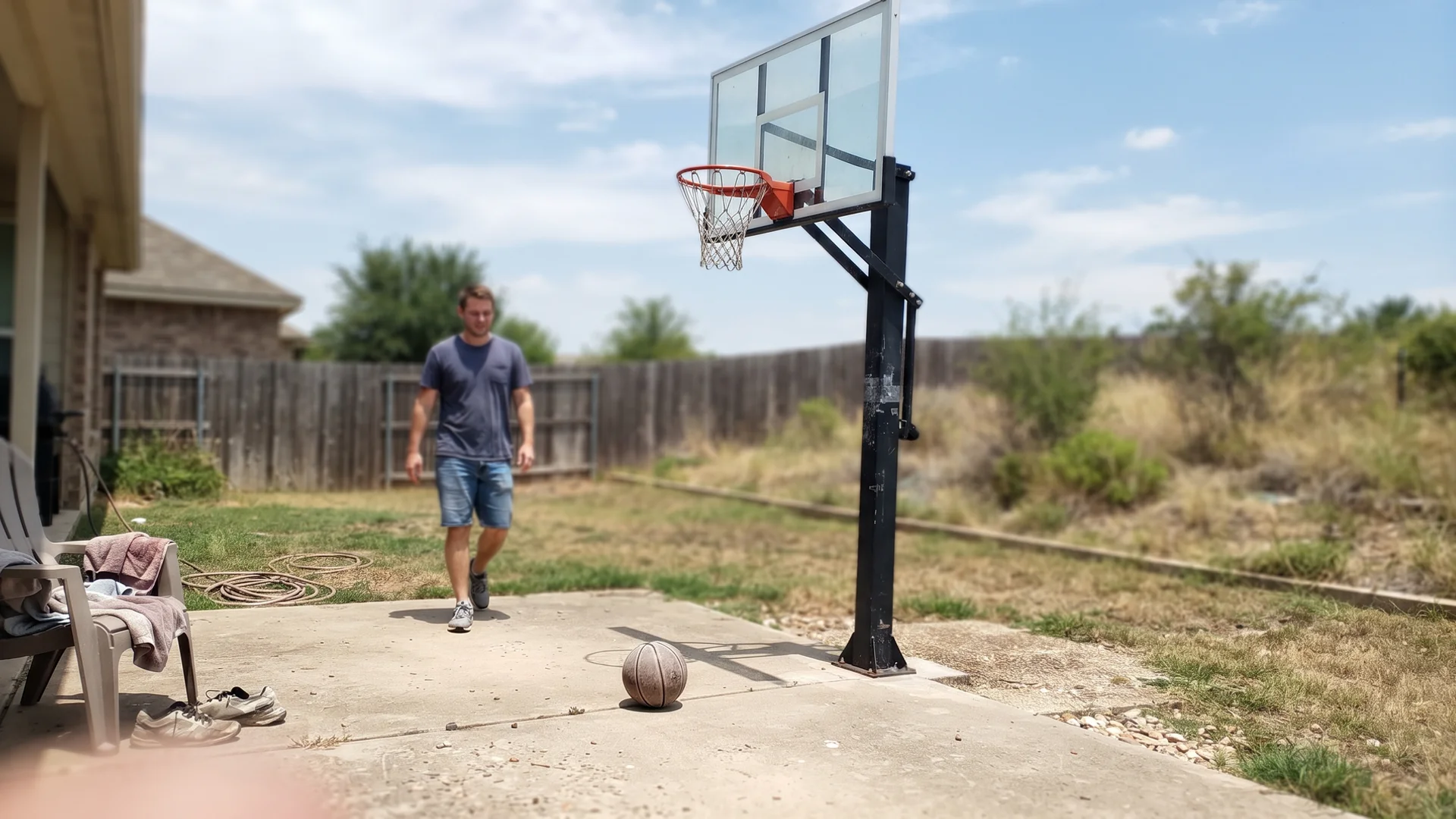
Pro-Grade Hoops & Nets Installation in Dallas–Fort Worth
In-ground basketball goals and heavy-duty tennis and pickleball net systems, professionally installed.
- Licensed & insured
- 325+ courts built
- 25–30 Days builds
- Free HOA handling
The Hardware Is What You Feel Every Time You Play
You notice a court’s surface for about a week. You notice its equipment every single session. A goal that shakes when the ball hits the rim, or a net that sags two inches in the middle by August, is what turns a good court into a slightly frustrating one.
We install equipment on new courts we build and on existing courts and driveways where the slab is already there. The standard is the same either way.
For basketball, that means in-ground adjustable goal systems with a cantilever arm assembly, a 72-inch tempered glass backboard, and a breakaway rim. The pole sits in a deep concrete footing anchor kit, poured separately from the court slab so the load is carried by its own mass of concrete rather than by a surface that was never engineered for it.
For tennis and pickleball, it means 2-7/8 inch net posts set in concrete footings, a brass internal-wind net tensioner housed inside the post, and a center strap anchor set flush into the playing surface so the net holds regulation height in the middle.
None of that is exotic. It is simply the specification that lasts, installed the way it is supposed to be.
Common Problems We Solve
Goals that develop a wobble
Portable bases filled with sand or water never feel solid, and shallow sleeves in a thin slab work loose within a season. Every dunk makes it worse. A deep, separate footing is the fix, and it has to cure properly before any load goes on it.
Backboards that yellow and flex
Acrylic and polycarbonate backboards discolour under Texas UV and flex visibly on contact, which kills the bank shot. Tempered glass stays clear and gives a true rebound.
Rims that bend permanently
A fixed rim bends the first time someone hangs on it, and once bent it puts stress on the backboard mounting too. A breakaway rim flexes and returns, which is why we fit one as standard on every goal.
Nets that sag by midsummer
External crank tensioners corrode, slip, and gradually give up. An internal-wind brass tensioner sits inside the post, protected from weather, and holds tension through a full season. Paired with a flush centre strap anchor, the net stays at height where it matters.
Adding Equipment to an Existing Court or Driveway
Plenty of our equipment work is on courts we did not build. A family buys a house with a slab already in the backyard, or wants a proper goal at the end of a driveway rather than a wheeled base that gets rolled out and back every weekend.
The assessment comes first. We check overhead clearance, because a goal under a tree limb or near a roof overhang is a problem you cannot fix later. We check run-off room behind the goal, since players need space to land. And we look at the existing concrete, because there is no point mounting quality hardware beside a slab that is breaking up.
Then we excavate a footing clear of the existing slab, set and level the anchor kit, and pour. The footing cures fully before the pole goes up. That wait is not padding in the schedule; it is the difference between a goal that is rigid in year five and one that is not.
Pole safety padding goes on before we leave. It costs very little and it matters the first time someone drives hard to the basket and comes up short of stopping.
Equipment on a New Build Is Cheaper
If you are building a court with us, equipment is part of the flat-rate quote and it goes in more cheaply than it ever will afterwards.
Goal footings get excavated while equipment is already on site. Net sleeves get cast directly into the slab during the pour, set flush with the finished surface, rather than core-drilled into cured concrete later. Cast sleeves are stronger, they sit perfectly flush, and unused ones cost almost nothing, which is why we suggest casting sleeves for any sport you might conceivably add later.
At handover we walk you through the height adjustment mechanism, show you how to tension the net correctly, and point out the two or three things worth checking at the start of each season. It takes ten minutes and it is the difference between equipment that lasts a decade and equipment that lasts three years.
Transparent Pricing
How Much Does Hoops & Nets Cost in Dallas?
Every project is quoted flat-rate and all-inclusive after a free on-site consultation. The ranges below are typical turnkey pricing, not a starting point that grows once we arrive.
Net System
tennis or pickleball net and posts
- Heavy-duty tennis or pickleball net
- 2-7/8 inch net posts
- Brass internal-wind net tensioner
- Centre strap anchor set flush
- Concrete post footings
- Tension set to regulation height
In-Ground Goal
adjustable goal with glass backboard
- In-ground adjustable goal system
- 72-inch tempered glass backboard
- Breakaway rim
- Cantilever arm assembly
- Concrete footing anchor kit
- Pole safety padding included
Full Equipment Package
goal plus multi-sport net system
- Everything in the goal and net packages
- Height-adjustable multi-sport net system
- Flush-set dual-purpose net sleeves
- Ball containment netting option
- Storage and ball caddy recommendations
- Full walkthrough and adjustment training
Equipment pricing depends on the system you choose and whether a footing needs to be excavated and poured. Installing during a new court build is cheaper, because footings go in alongside the slab work.
Why Choose Us
Why DFW Trusts Us With Hoops & Nets
Footings poured properly, every time
A concrete footing anchor kit set in a deep, separate footing is what makes a goal feel rigid. Shallow sleeves and sand-filled portable bases work loose and wobble within a season.
Tempered glass, not acrylic
A 72-inch tempered glass backboard gives a true rebound and holds its clarity under Texas UV. Acrylic and polycarbonate yellow and flex noticeably on contact.
Breakaway rims as standard
A breakaway rim releases under load and springs back, protecting both the rim and whoever is hanging on it. It is standard on every goal we install, not an upgrade.
Brass tensioners that hold
A brass internal-wind net tensioner keeps the net at regulation height through a full season. Cheap external crank hardware corrodes and slips, and the net sags in the middle.
Anchors set flush
Centre strap anchors and net sleeves go in flush with the surface so there is nothing to catch a foot. Retrofitted anchors that sit proud are a genuine trip hazard.
Padding included
Pole safety padding comes as part of the install rather than an optional extra. It matters the first time someone drives hard and comes up short.
Our Process
How Our Hoops & Nets Work Runs
- 01
Assess the location
We check overhead clearance, run-off room behind the goal, existing slab condition, and where a footing can safely go.
- 02
Specify the system
Goal height range, backboard size, rim type, and net hardware chosen to match how the court actually gets used.
- 03
Excavate the footing
A deep concrete footing separate from the court slab, with the anchor kit set and levelled before the pour.
- 04
Cure and mount
The footing cures fully before any load goes on it. Then the pole, cantilever arm, backboard, and rim are assembled and mounted.
- 05
Net posts and tensioning
Posts set in footings, brass internal-wind tensioner fitted, centre strap anchor flush with the surface, net set to height.
- 06
Padding & walkthrough
Pole safety padding fitted, height adjustment demonstrated, and everything checked before we leave.
How Installers of Dallas Compares
| Feature | Typical Contractor | Installers of Dallas |
|---|---|---|
| Goal mounting | Portable base or shallow sleeve | Deep concrete footing anchor kit |
| Backboard | Acrylic or polycarbonate | 72-inch tempered glass |
| Rim | Fixed rim | Breakaway rim |
| Net tensioner | External crank hardware | Brass internal-wind tensioner |
| Pole padding | Optional extra | Included as standard |
| Anchors | Surface-mounted, sits proud | Set flush with the surface |
Not sure Hoops & Nets is the right fit?
We will measure your site free and tell you honestly what works. No obligation, no pressure.
Our Work
Recent Hoops & Nets Projects
A sample of completed work across Dallas–Fort Worth. Click any image to enlarge.
Client Reviews
What Customers Say About Our Hoops & Nets
“We already had the slab. They put in the goal and the footing in a day and it does not move at all, even when the kids hang off it.”
“The net tensioner is the detail I did not know to ask about. A season in and it still sits at exactly the right height.”
“Adjustable rim height means our eight-year-old and our sixteen-year-old both actually play on it. Twenty seconds to change.”
Common Questions
Hoops & Nets FAQs
Can you install equipment on an existing court or driveway?
Why does the footing matter so much?
What backboard size should I get?
Can the rim height be adjusted?
What is a breakaway rim and do I need one?
What makes a good tennis or pickleball net system?
Can one net system work for two sports?
How long does installation take?
Do I need HOA approval for a basketball goal?
Do you install equipment as part of a new court build?
Still have a question?
Tell us about your property and we will answer it on a free on-site consultation.
Ask Our TeamHoops & Nets Guides
Detailed answers to the questions people ask before they commit to a build.
Related Services
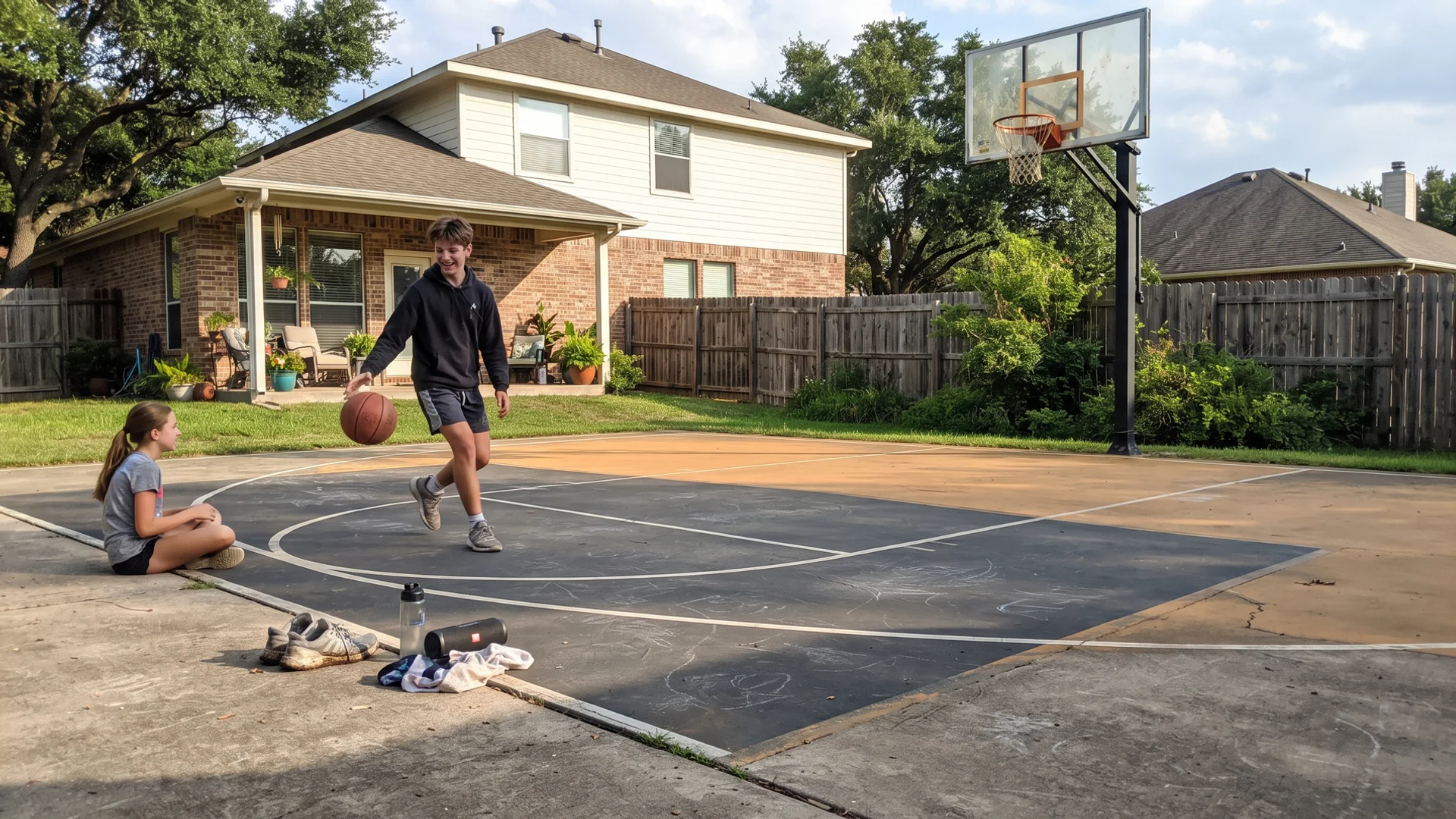
Basketball Court Construction
Mini, half-court, and full-size backyard basketball court builds with pro-grade in-ground hoops.
Learn more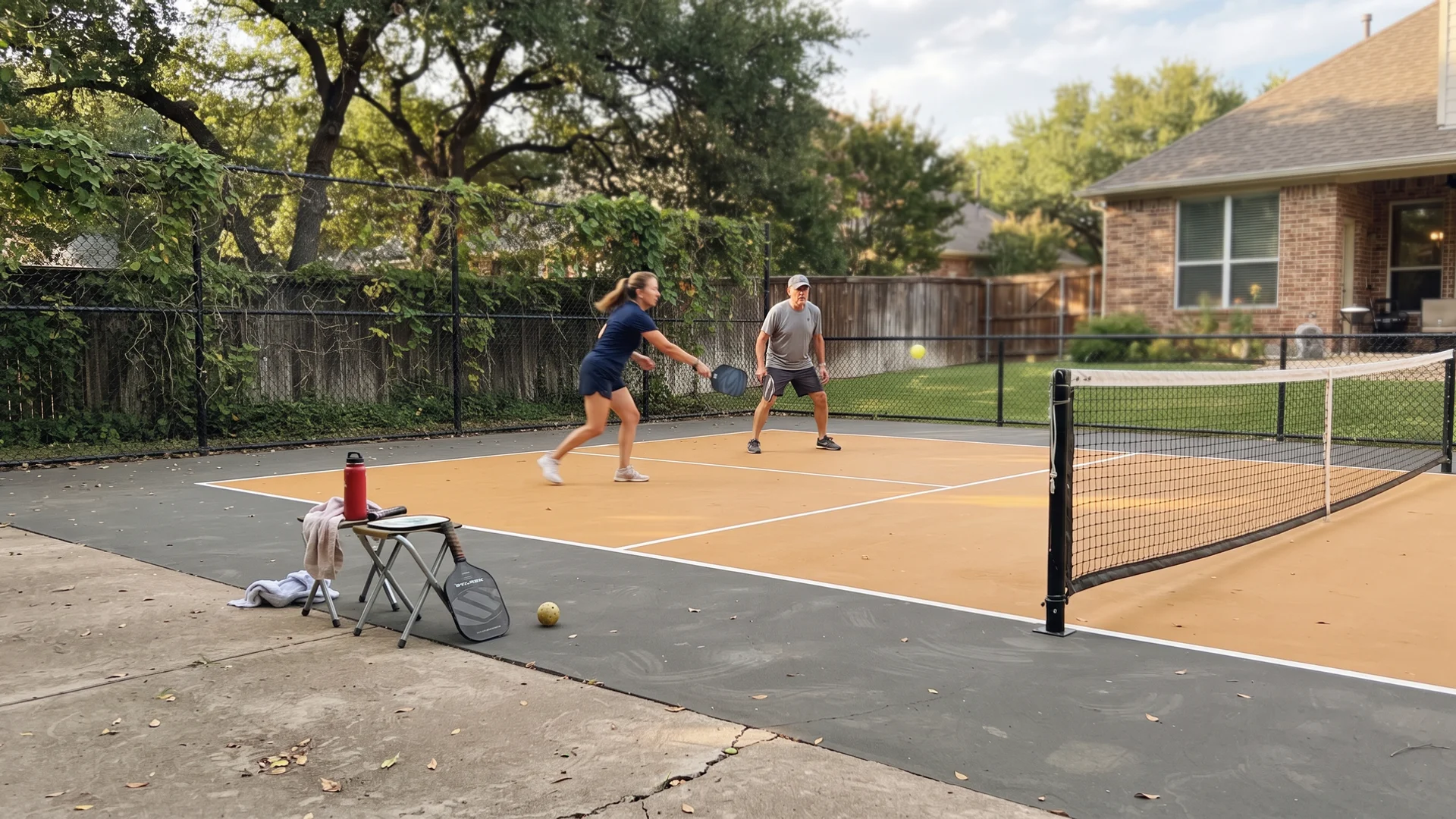
Pickleball Court Construction
Custom single and multi-court pickleball builds for backyard and commercial properties across Dallas–Fort Worth.
Learn more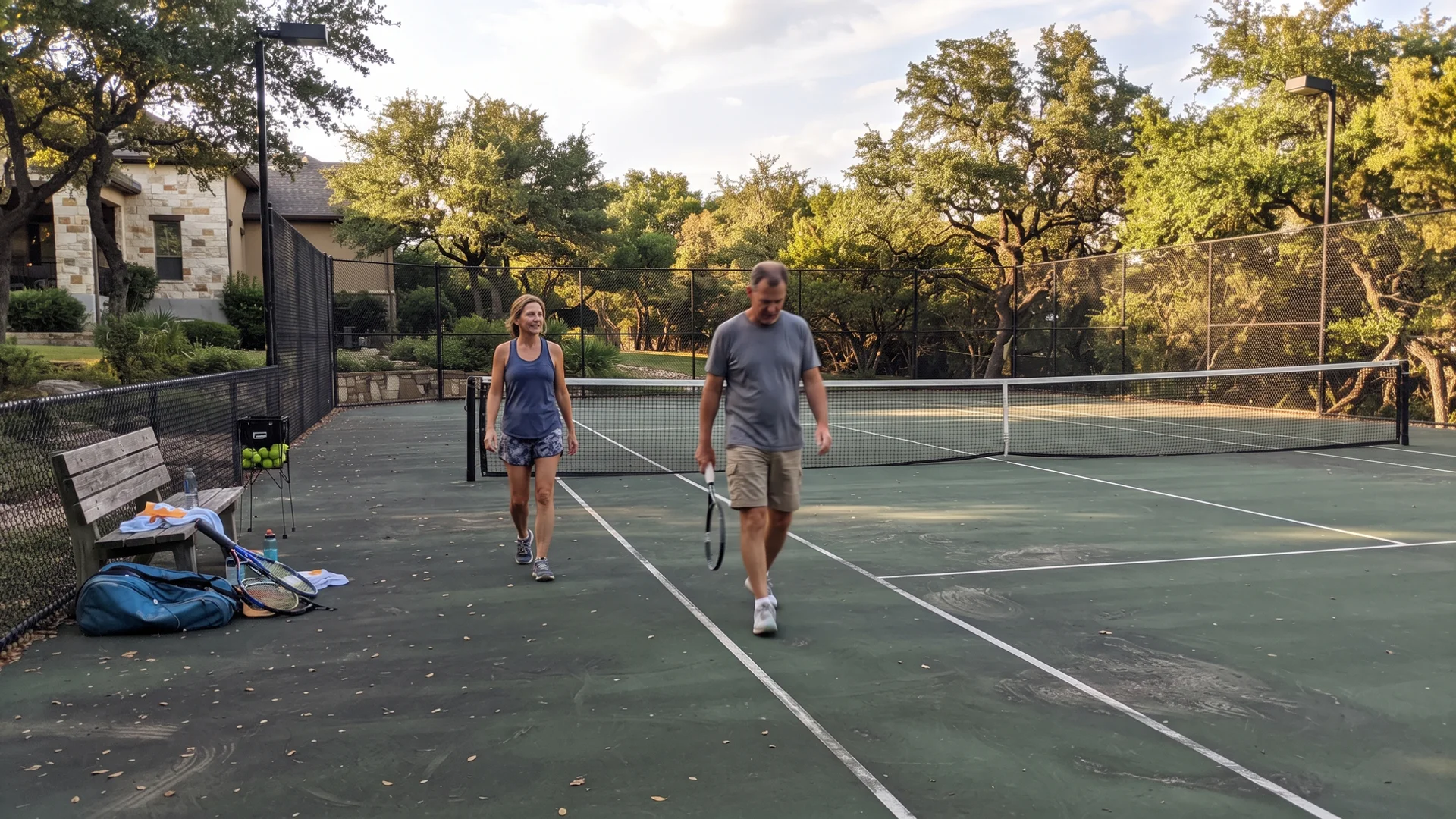
Tennis Court Construction
Full-size professional and space-saving mini tennis court construction for North Texas homes.
Learn more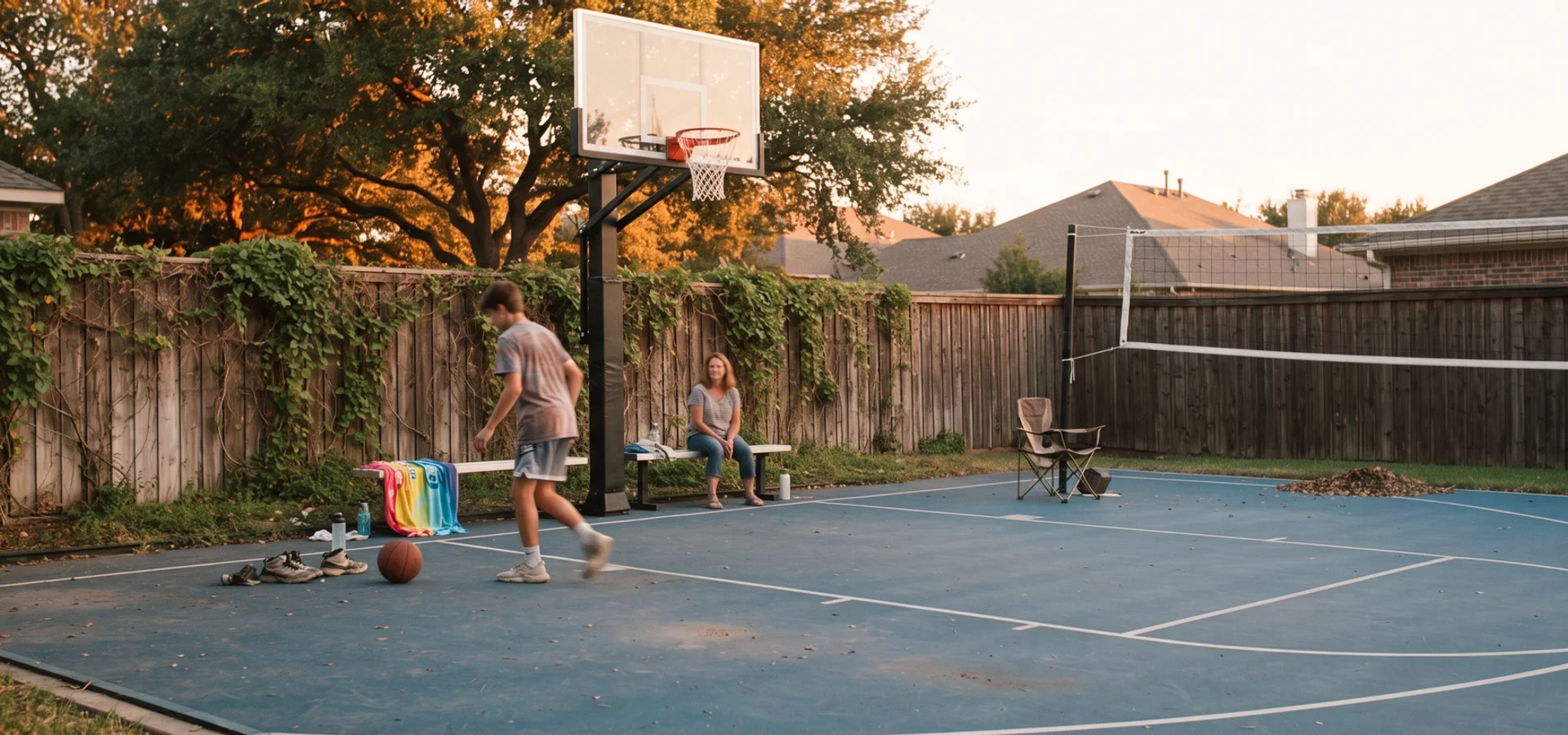
Ready to Start Your Hoops & Nets Project?
Book a free on-site consultation and 3D design. You get a flat-rate, all-inclusive hoops & nets installation quote with no hidden fees.
- 325+ courts built across Texas
- Free HOA permitting handled
- Flat-rate pricing, no hidden fees