The Economics Are Not Close
Start with where the money goes on any court, because it settles most of this argument.
Excavation, the compacted sub-base, the engineered post-tension slab, and the acrylic surface system account for the large majority of what you pay. Line striping is a small fraction of it, and net hardware smaller still.
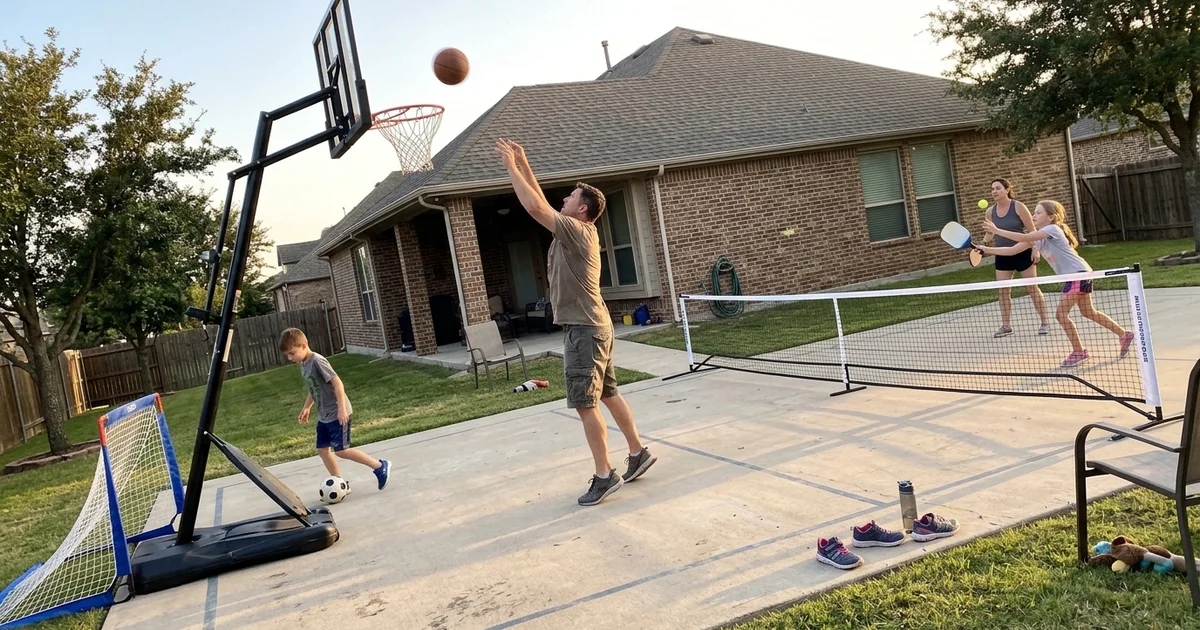
That means adding a second sport to a pad you were already pouring is the cheapest square footage in court construction. A 30 by 60 foot pad, which is exactly what a dedicated pickleball court needs, carries a half-court basketball layout as well. You get two sports for close to the price of one.
Building two dedicated courts instead means two slabs, two surfaces, and roughly double the cost for the same two sports. That economic gap is the core argument for multi-sport court construction.
Where a Dedicated Court Genuinely Wins
Cost is not the only consideration, and there are real cases for a single-sport build. It also helps to know what sports a multi-sport court can actually support before ruling either option in or out.
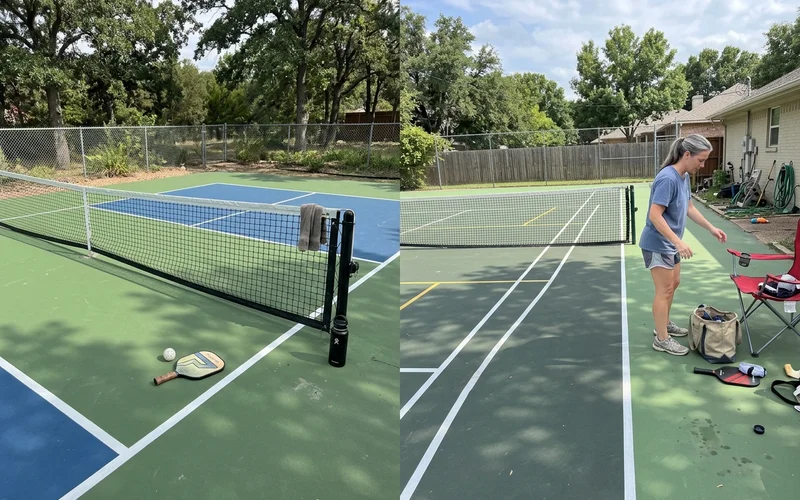
Competitive play. A dedicated court has one clean line set and no visual competition. Players training seriously, or courts used for organised play, benefit from that clarity. It is a modest advantage, and it is real.
Simultaneous use. Two households sharing a court cannot play basketball and pickleball at the same time on a shared pad. If simultaneous play matters, you need either an oversized pad with zones or two courts.
Tennis. The one sport that does not combine well downward. A tennis court is 60 by 120 feet and everything else looks lost on it. Build a tennis court and stripe pickleball on it if you want both, rather than trying to make a smaller multi-sport pad serve tennis.
Community facilities with heavy single-sport demand. If your HOA has forty residents playing pickleball three evenings a week, a bank of dedicated courts serves them better than one multi-sport pad.
Side by Side
| Factor | Multi-sport court | Dedicated single-sport court |
|---|---|---|
| Cost for two sports | One slab, one surface | Two slabs, two surfaces |
| Space efficiency | Highest | Lower |
| Line clarity | Good with proper colour design | Best |
| Simultaneous play | No, on a standard pad | Yes, across two courts |
| Household versatility | Highest | Depends on the sport chosen |
| Best for | Families, mixed-age households, most HOAs | Competitive play, heavy single-sport demand |
| Renewal cost | One surface to resurface | Two surfaces to resurface |
The Family Argument
Beyond cost, there is a usage argument that comes up repeatedly in our follow-up conversations.
Dedicated courts get used by the people who play that sport. Multi-sport courts get used by the household. A teenager shoots hoops after school, the adults play pickleball after dinner, and the volleyball net comes out when friends are over. The court is busy most evenings instead of most weekends.
That pattern is consistent enough across our projects that we now raise multi-sport with nearly every residential enquiry, including people who came in asking specifically about dedicated pickleball courts.
For HOA Boards
The calculation shifts slightly for shared facilities.
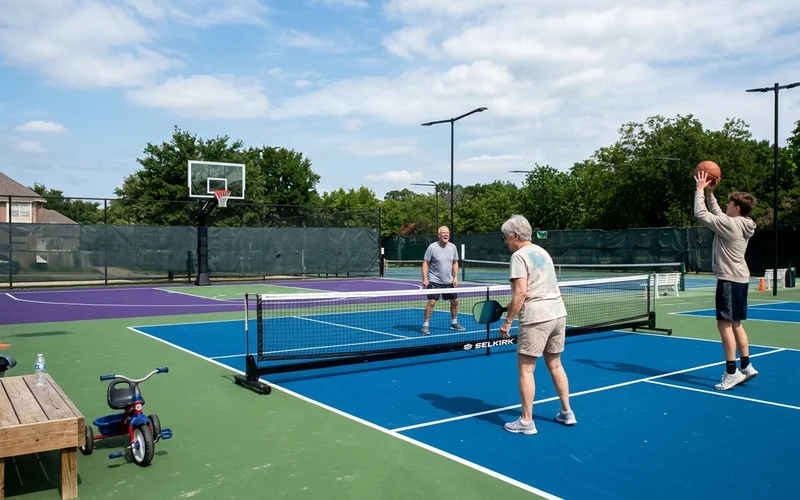
Multi-sport maximises amenity value per dollar, which matters when a board is justifying spend to residents. One pad serving pickleball, basketball, and volleyball reaches more households than a single dedicated court.
But throughput matters too. If pickleball demand in your community is high, four residents waiting for one multi-sport pad is a worse outcome than two dedicated courts running simultaneously. In that case a small bank of dedicated courts, or a larger pad designed with zones, is the better answer.
We work through that with boards during the scoping stage, because it depends entirely on what residents actually want and how many of them there are.
How We Would Decide
If you want two or more sports and a standard suburban lot, build multi-sport. The economics are decisive and the play-quality difference is small.
If one sport clearly dominates and someone in the household plays it seriously, build dedicated and stripe a second sport on it anyway, because the marginal cost is trivial.
If tennis is the priority, build a tennis court and add pickleball lines to it.
Whatever the layout, the engineering underneath is identical. You can see the full specification on our multi-sport court construction page, and the free on-site consultation will show you both options modelled on your actual lot.